
The Only Deep Cleaning Checklist You Need This Year

This checklist gives you a complete, room by room plan to deep-clean your home from top to bottom, and you can start using it today. It works through every space in the order professional crews actually use: prep first, then kitchen, bathrooms, bedrooms, living areas, laundry, garage, and the spots almost everyone forgets.
- Outcome: a finished, whole-home deep clean, not just a tidier surface layer
- Structure: room by room, top to bottom, so debris and dust fall onto surfaces you haven’t cleaned yet, not ones you already finished
- Quick win: before you touch a rag, do a five-minute “declutter sweep” through each room. Clear counters, floors, and surfaces so you’re cleaning the room, not digging through it.
Key Takeaways
A complete deep clean requires decluttering first, working room by room from top to bottom, and hitting overlooked spots like vents, baseboards, and behind appliances every three to six months.
| Point | Details |
|---|---|
| Declutter before cleaning | Sort items into keep, donate, or trash piles before you touch a single surface. |
| Work top to bottom | Clean ceilings and shelves before floors so debris falls onto surfaces you haven’t finished. |
| Target overlooked spots | Baseboards, vents, window tracks, and behind appliances hide the most missed buildup. |
| Set a realistic cadence | Deep-clean high-traffic rooms every one to three months, low-use spaces twice a year. |
| Hire pros for heavy jobs | Limpiezatropical handles move-outs, rentals, and overdue deep cleans with an instant estimate and free fridge cleaning included. |
Table of Contents
- What Do You Need Before You Start a Deep Clean?
- How Do You Deep Clean a Kitchen From Top to Bottom?
- What Belongs on a Bathroom Deep-Clean Checklist?
- How Do You Deep Clean Bedrooms and Reduce Allergens?
- What’s the Checklist for Living Rooms and Common Areas?
- How Do You Deep Clean the Laundry and Utility Room?
- What Should the Garage and Patio Checklist Include?
- How Do You Deep Clean Kid and Pet Areas Safely?
- What Spots Do Most People Forget to Clean?
- How Often Should You Deep Clean Your Home?
- What Do Professional Cleaners Do Differently?
- When Does This Checklist Stop Being a DIY Job?
- A Straight Take on Deep Cleaning Checklists
- Sources
What Do You Need Before You Start a Deep Clean?
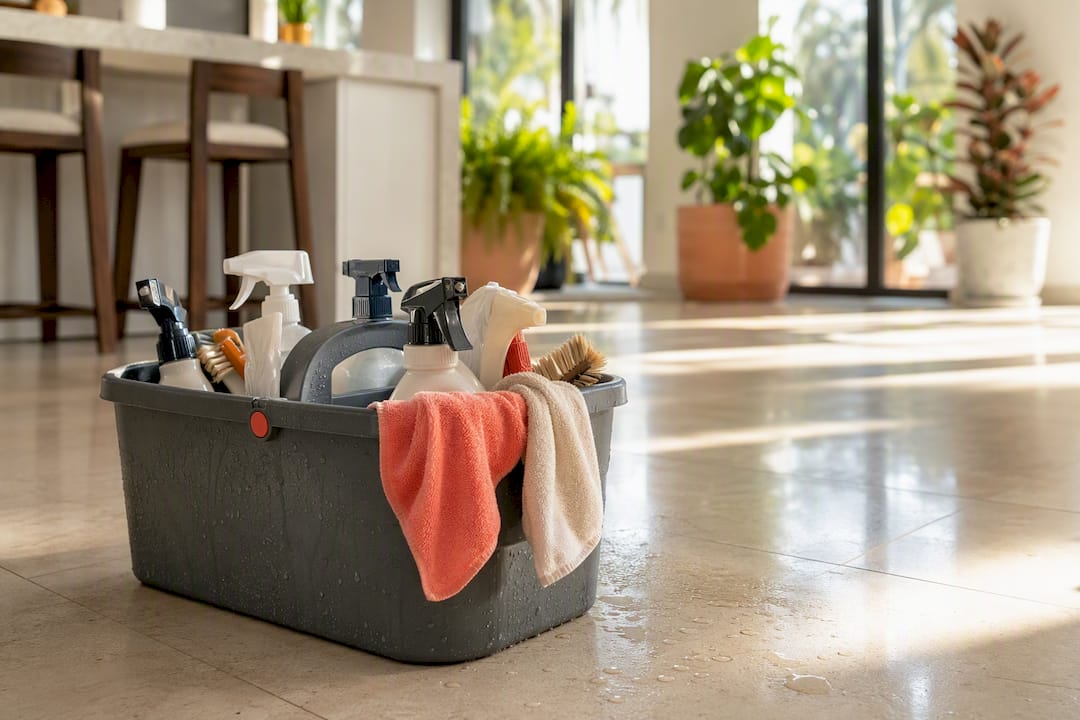
Grab your supplies before you start; stopping to search for the glass cleaner halfway through the bathroom kills momentum. Start by decluttering room by room and sorting items into keep, donate, or trash piles. This single step is what separates a fast, efficient deep clean from one that drags into a second weekend, because clutter forces you to clean around things instead of cleaning them.
Here’s what belongs in your kit:
- Microfiber cloths (at least a dozen) for streak-free glass, electronics, and dusting.
- All-purpose cleaner for counters, cabinets, and general surfaces.
- Degreaser specifically for stovetops, range hoods, and oven exteriors.
- Disinfectant spray or wipes for high-touch surfaces and bathrooms.
- Baking soda and white vinegar for natural deodorizing and descaling.
- A detail brush, grout brush, and crevice attachment for tight spots.
- Rubber gloves and a well-fitted mask for chemical safety.
Never mix bleach and ammonia products. That combination releases toxic chloramine gas, and it’s one of the most common accidental poisonings tied to home cleaning. Crack a window or run a fan whenever you’re working with any strong chemical, even ones marketed as “natural.”
Pro Tip: Load everything into a portable caddy or bucket before you start. Carrying your supplies room to room saves more time over a full-day deep clean than any single cleaning hack you’ll find online.
How Do You Deep Clean a Kitchen From Top to Bottom?
The kitchen eats the most time in any deep clean, mostly because it hides the most grease. Work it in this order and you won’t backtrack.
Start with the fridge and pantry. Pull everything out, toss expired items, and wipe down every shelf and drawer with warm soapy water before anything goes back in. This is also your moment to wipe down the inside of cabinet doors and shelving, since food residue and dust build up there without anyone noticing for months.
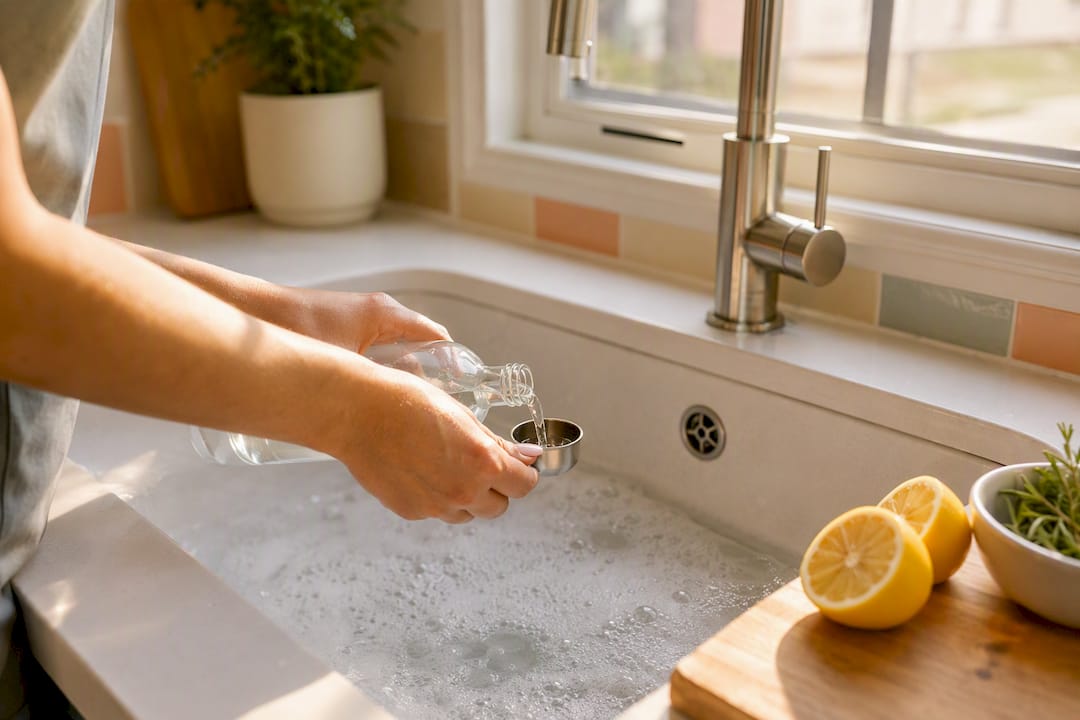
Next, tackle appliance-specific routines. Run a hot, empty dishwasher cycle with a cup of vinegar to clear mineral buildup. Descale the coffee maker the same way. Soak oven racks in warm soapy water while you run the oven’s self-clean cycle or scrub the interior by hand, and microwave a bowl of water and lemon juice for a few minutes so caked-on splatters wipe away instead of needing to be scraped off, a trick pulled from common professional appliance routines.
Then move to the stove area. Degrease the backsplash, remove and soak the range hood filter, and wipe down cabinet fronts where grease film tends to settle unnoticed.
Finish at the sink: scrub the basin, run ice cubes and rock salt through the disposal to clean the blades, and descale the faucet head with a vinegar soak if you’re in a hard-water area. Mop last, working backward toward the doorway, and don’t skip behind the fridge and stove. That gap collects an outsized share of a kitchen’s dust and grease, which is exactly why professional checklists flag behind-appliance zones as one of the most commonly missed deep-clean tasks.
- Empty and wipe down fridge and pantry shelves
- Run vinegar cycles in the dishwasher and coffee maker
- Degrease stovetop, hood filter, and cabinet fronts
- Scrub sink, disposal, and faucet fixtures
- Mop floors last, including behind and under appliances
What Belongs on a Bathroom Deep-Clean Checklist?
Bathrooms need a different order than the rest of the house because moisture changes what you’re actually fighting: mold, mildew, and mineral buildup, not just dust.
- Wash textiles first. Bath mats, shower curtains, and towels go into the wash while you tackle everything else, so you’re not waiting on the machine later.
- Scrub grout and caulk lines. A stiff grout brush and a baking soda paste handle most discoloration. Inspect the caulk around the tub and shower while you’re at it. Cracked or peeling caulk lets water seep behind tile, which is how small mold problems become expensive repairs.
- Soak the showerhead and descale fixtures. A plastic bag filled with vinegar, tied around the showerhead overnight, clears mineral deposits without scrubbing. Use the same solution on faucet aerators and glass shower doors.
- Deep-clean the toilet base and hidden edges. Most people clean the bowl and forget the base, the hinges, and the space behind the tank, exactly where grime tends to concentrate.
- Clean the exhaust fan cover and check the filter. A dusty fan cover cuts ventilation efficiency, and poor ventilation is one of the biggest drivers of bathroom mold in the first place.
Pro Tip: Run the exhaust fan or crack a window for at least twenty minutes after every shower going forward. It’s a small habit that dramatically cuts how often you’ll need to fight mold during your next deep clean.
How Do You Deep Clean Bedrooms and Reduce Allergens?
Bedrooms collect more allergens than almost any other room in the house, mostly because you spend seven or eight hours a night shedding skin cells and breathing into the same few feet of fabric.
- Strip every bed completely and wash sheets, pillowcases, and mattress pads in hot water, ideally 130°F or higher, to kill dust mites.
- Vacuum the mattress on both sides using an upholstery attachment, then sprinkle baking soda, let it sit for fifteen minutes, and vacuum it up again to lift trapped odors. Rotate the mattress if the manufacturer allows it.
- Dust from the top down: ceiling fan blades and light fixtures first, then furniture surfaces, then baseboards. Wipe blinds slat by slat and vacuum under the bed, an area that becomes a dust reservoir faster than almost anywhere else in the room.
- Go through closets and pull items you haven’t worn in a year. Wipe down shelving before anything goes back in.
What’s the Checklist for Living Rooms and Common Areas?
Common areas take the most daily traffic in the house, so they need the most attention to upholstery, screens, and floors.
- Vacuum every inch of upholstered furniture, flip and rotate cushions, and spot-treat any visible stains with a fabric-safe cleaner before they set permanently.
- Dust electronics with a dry microfiber cloth, and use a slightly damp one for screens. Skip glass cleaner directly on TVs and monitors since ammonia-based sprays can damage anti-glare coatings.
- Wash curtains according to their care tag or vacuum blinds slat by slat, then wipe down window tracks and sills, where dirt and dead insects tend to pile up unnoticed for months.
- Finish with floors: vacuum rugs on both sides if they’re small enough to flip, and use a wood-safe or tile-appropriate cleaner rather than an all-purpose spray that could dull the finish.
How Do You Deep Clean the Laundry and Utility Room?
Your washer and dryer need their own maintenance, not just the clothes going through them.
- Run an empty hot-water cycle with washer cleaner or vinegar, then wipe down the rubber gasket and detergent dispenser where mold and residue collect fastest.
- Clean the lint trap thoroughly, not just the surface lint. A full dryer vent inspection is worth scheduling periodically, since lint buildup in dryer vents is a documented fire risk that routine cleaning alone won’t catch.
- Wipe down counters and shelving, and organize detergents and supplies so you’re not digging through clutter next time.
- Sweep and mop the floor, paying attention to the corners behind the machines.
What Should the Garage and Patio Checklist Include?
Outdoor-adjacent spaces don’t need a full deep clean every time, but a few tasks keep dirt from migrating indoors.
- Declutter first, and pull vehicles out so you can actually sweep the full floor.
- Wipe down shelving and storage bins, clean out floor drains, and check corners for signs of pests before they become a bigger problem.
- Hose down patios and wipe outdoor furniture as needed, especially before hosting season or after heavy pollen weeks.
How Do You Deep Clean Kid and Pet Areas Safely?
Kid and pet spaces need sanitizing more than scrubbing, since the goal is hygiene, not just appearance.
- Remove toys from play areas and launder soft toys, play mats, and rugs on a hot cycle where the fabric allows.
- Sanitize hard play surfaces and storage bins with a disinfectant safe for the materials involved.
- Wash pet bedding weekly to biweekly, and tidy feeding stations where spilled food attracts pests.
- Empty and sanitize litter boxes and covered trash containers, and vacuum pet hair out of upholstery and air vents, where it builds up and can reduce airflow over time.
What Spots Do Most People Forget to Clean?
These are the areas that separate a real deep clean from a surface-level one, and they’re the tasks professional checklists consistently call out as the ones routine cleaning skips.
- Baseboards: wipe with a damp microfiber cloth or a dryer sheet, which also helps repel dust afterward.
- Air vents and return grilles: vacuum with a brush attachment, then wipe with a damp cloth to catch what the vacuum leaves behind.
- Window tracks: use an old toothbrush or detail brush to loosen debris, then vacuum with a crevice attachment.
- Door frames and light switches: wipe with disinfectant since these are among the highest-touch surfaces in any home.
- Behind and under large appliances: slide them out where possible and vacuum or sweep the space you’d otherwise never see.
Pro Tip: While you’re back there, do a quick visual check for mold spots, cracked caulk, or pest droppings. Catching these early during a routine deep clean is far cheaper than discovering them during a repair call.
How Often Should You Deep Clean Your Home?
Frequency depends on how hard a space gets used. High-traffic rooms like kitchens and bathrooms generally need a full deep clean every one to three months, while lower-use spaces like guest rooms or garages can often stretch to twice a year. Many cleaning guides put the general baseline at every three to six months for a whole-home deep clean, with more frequent passes recommended for households with pets or allergy sufferers.
Two schedules work well depending on your life:
- Weekend blitz: block out a full Saturday and Sunday, tackle two to three rooms per half-day, and expect four to six hours total for an average-sized home.
- Month-by-room spread: deep-clean one room per week, spending sixty to ninety minutes per session, so the whole home gets covered without one exhausting marathon.
Rentals and homes with pets usually need to lean toward the shorter end of these windows, since higher turnover and shedding both accelerate buildup.
What Do Professional Cleaners Do Differently?
Limpiezatropical treats every deep clean the way this checklist is built: room by room, top to bottom, with supplies staged before the first surface gets touched. That discipline is what separates a two-hour job from one that drags into the evening.
The difference professional crews bring isn’t effort, it’s equipment and repetition. A team that deep-cleans homes daily has commercial-grade degreasers, HEPA vacuums, and a rhythm that gets a full kitchen done in the time it takes most homeowners to finish the fridge alone. Limpiezatropical’s instant estimate tool quotes a job in under sixty seconds, no callback required, and every visit includes a complimentary fridge cleaning at no extra charge.
For homeowners juggling a full schedule, that’s the honest tradeoff: your time versus a flat, upfront price.
When Does This Checklist Stop Being a DIY Job?
Most of this checklist is built for a determined weekend and a well-stocked caddy. But there’s a point where the math stops favoring DIY, and it usually shows up around move-outs, rental turnovers, or homes that haven’t seen a real deep clean in over a year.
Move-out cleans need to satisfy a landlord’s inspection, not just look decent to you, and heavy grime buildup after months of deferred cleaning can turn a “quick weekend project” into three exhausting days. Airbnb turnovers add a tighter deadline on top of that: guests notice a greasy stovetop or a dusty vent within minutes of checking in.

That’s the gap Limpiezatropical fills. Its deep cleaning service covers everything on this checklist, plus the equipment and hours most households don’t have lying around, and every visit includes the same complimentary fridge cleaning mentioned above at no extra cost. Recurring plans are available for households in Miami-Dade County who’d rather not repeat this whole process every few months, with discounted pricing for weekly, biweekly, or monthly service. If you’re weighing your own time against a flat quote, get an instant estimate and see the number before you commit to anything.
A Straight Take on Deep Cleaning Checklists
Most deep-clean guides treat every room like it deserves equal time, and that’s where people burn out. The kitchen and bathrooms carry the bulk of the grime, the bacteria, and the mold risk in any home. Bedrooms and living rooms matter for comfort and allergens, but they rarely need the same intensity every single time.
The other thing worth saying plainly: a checklist doesn’t fix a scheduling problem. If you’re consistently skipping deep cleans because life gets in the way, more detailed instructions won’t solve that. What solves it is either committing to a realistic recurring schedule for yourself or handing the job to someone whose schedule doesn’t get overrun the way yours does. Neither choice is a failure. The failure is pretending a task list alone will make the two months’ worth of missed cleanings disappear.
— Luka