
5 Times Homeowners Should Disinfect: Disinfection vs Cleaning
Cleaning removes dirt, grease, and many germs with soap and physical scrubbing. Disinfecting uses chemicals to kill specific pathogens left behind. The rule that matters most: clean first, always, then disinfect only when someone in your home is sick, a surface gets hit with body fluids, or you’re dealing with a high-risk situation. For everyday spaces, cleaning alone usually does the job.
TL;DR:
- Disinfecting should be reserved for high-risk situations, such as after illness, body fluid contact, or when vulnerable individuals are present.
- Proper disinfection requires the surface to be clean; organic matter can shield germs and reduce the effectiveness of chemical disinfectants.
- Disinfectants must stay wet on the surface for the full dwell time specified on the label to effectively kill pathogens.
- Routine cleaning with soap and water is sufficient for daily household hygiene, and overuse of disinfectants can lead to unnecessary chemical exposure.
- Hiring professional cleaners ensures thorough pre-disinfecting cleaning, especially for heavy soil buildup, move-ins, or post-illness deep cleaning.
Table of Contents
- Disinfection vs. Cleaning: The Terms People Mix Up
- How Cleaning and Disinfecting Actually Work
- When Should You Disinfect Instead of Just Clean?
- How to Disinfect Safely Without Wasting the Product
- A Simple Room-by-Room Routine You Can Follow Today
- Your Quick-Reference Hygiene Checklist
- What Professional Cleaners Know That Most Households Don’t
- Book a Deep Clean That Handles the Hard Part First
- Sources
Disinfection vs. Cleaning: The Terms People Mix Up
The confusion around disinfection vs cleaning starts because both actions often happen in the same five minutes with the same rag. But they’re not interchangeable, and the difference matters for how well you actually protect your household.
- Cleaning uses soap or detergent plus scrubbing, wiping, or rinsing to physically remove dirt, grease, and organic matter. It doesn’t necessarily kill germs, but it removes most of them along with the grime they’re hiding in.
- Sanitizing lowers germ counts, mostly bacteria, to levels public health standards consider safe. It’s the middle step you’ll see on food-contact cleaners and baby toy sprays.
- Disinfecting kills specific pathogens named on a product’s label. The EPA regulates disinfectants as antimicrobial pesticides, which means a company has to prove the claim before it goes on the bottle.
That EPA registration is worth remembering. It’s the difference between a product that sounds strong and one that’s actually been tested against the germs you’re worried about.
How Cleaning and Disinfecting Actually Work
Cleaning works through mechanical action. You’re physically lifting dirt, oil, and microbes off a surface with a cloth, a scrub brush, or running water, then rinsing them away. Disinfecting works chemically. The active ingredient has to make contact with a pathogen’s cell structure and break it down, which only happens if the surface is clean enough for the chemical to reach the germs instead of getting soaked up by grease or grime first.
That’s why soil interferes with disinfection: organic matter can physically shield germs from the chemical, letting them survive a disinfectant wipe-down that should have worked.
Common active ingredients target different things:
- Bleach (sodium hypochlorite) kills a broad range of bacteria and viruses but damages fabrics and some metals.
- Alcohol (ethanol or isopropyl) works fast on hard, nonporous surfaces like phone screens and countertops.
- Hydrogen peroxide breaks down organic material and pathogens without leaving much residue.
Food-contact surfaces need sanitizing or disinfecting followed by a rinse if the label calls for it. Porous fabrics generally need washing, not spraying. Electronics need alcohol wipes made for screens, never a soaked cloth.
When Should You Disinfect Instead of Just Clean?
Most households overthink this. Routine cleaning handles daily hygiene fine, and CDC guidance is direct about it: disinfecting to reduce disease spread at home usually isn’t necessary unless someone is sick or you’re facing a higher-risk situation.
Here’s how to decide what a given moment calls for:
- Someone in the house is sick. Disinfect high-touch surfaces they’ve contacted, especially bathroom fixtures and shared electronics.
- There’s been vomiting or diarrhea. These involve pathogens that spread easily and often require disinfection plus proper waste handling.
- You’re caring for someone high-risk. Infants, elderly relatives, or anyone immunocompromised justifies more frequent disinfection of surfaces they touch.
- It’s a normal day and everyone’s healthy. Clean as usual. Soap and water on doorknobs, light switches, and remotes covers your bases.
- You’ve had guests or a gathering. A quick wipe-down of shared surfaces is reasonable, but full disinfection isn’t required unless someone showed up sick.
The pattern here is exposure risk, not habit. Disinfecting every countertop daily “just in case” doesn’t add protection when nobody’s ill. It just adds chemical exposure.
How to Disinfect Safely Without Wasting the Product
Buying a disinfectant is the easy part. Using it correctly is where most people fall short, usually because they wipe it off before it’s done working.
- Choose an EPA-registered disinfectant labeled for the pathogen you’re targeting, or use a properly diluted bleach solution.
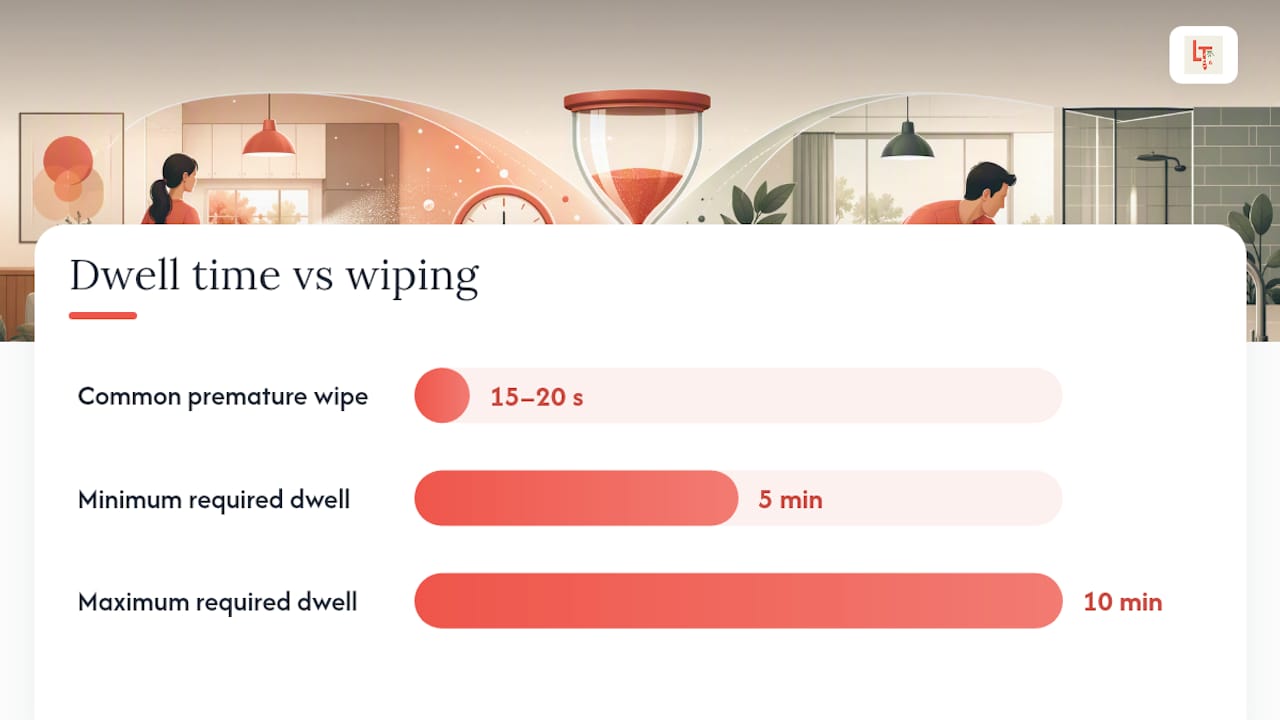
- Keep the surface visibly wet for the full dwell time listed on the label. Wiping too soon defeats the product’s effectiveness even if you used the right chemical.
- Never mix bleach and ammonia or combine different disinfectant products. The reaction produces toxic gas.
- Ventilate the room, open a window if you can, and wear gloves if the label recommends it.
- Rinse food-contact surfaces afterward if the product instructions call for it.
Pro Tip: Set a timer for the dwell time listed on your product’s label. Most people wipe disinfectant off after 15 to 20 seconds when many products need 5 to 10 minutes of contact to actually work.
Washington State’s health department warns against the “more is better” instinct with disinfectants. Stronger isn’t always safer, and unnecessary chemical exposure can irritate skin and lungs without adding real protection. For a deeper walkthrough of contact-time guidance, this surface disinfection process breakdown covers the mechanics well.
A Simple Room-by-Room Routine You Can Follow Today
Cleaning and sanitizing, and knowing when to add disinfection, comes down to a repeatable sequence rather than guesswork.
- Remove visible soil first. Wipe up crumbs, spills, and grime before anything else touches the surface.
- Wash with soap or detergent, then rinse. This step alone handles most day-to-day germs on kitchen counters, bathroom sinks, and floors.
- Apply disinfectant only if the situation calls for it, and respect the label’s dwell time from start to finish.
- Handle electronics differently. Use alcohol wipes made for screens; never spray liquid directly onto a device.
- Adjust frequency to the moment. Daily wipe-downs for high-touch spots, added disinfection after illness, and a deeper pass during flu season.
If you’re rebuilding your kitchen routine from scratch, a kitchen deep cleaning checklist walks through surface-safe products room by room. And if flu has been through your house recently, this room-by-room disinfection guide is worth bookmarking before symptoms even start.
Your Quick-Reference Hygiene Checklist
Save this for the days you don’t want to think too hard about it.
- Everyday: Tidy clutter, wipe high-touch points, wash hands often.
- If someone’s sick: Disinfect shared surfaces frequently, launder linens on hot, isolate the sick person’s dishes and towels.
- Deep or seasonal clean: Bring in a professional service when soil has built up beyond what a wipe-down can handle.
| Scenario | Primary action | Add disinfection? |
|---|---|---|
| Normal daily household | Clean with soap and water | No |
| Someone has flu or stomach bug | Clean, then disinfect high-touch spots | Yes |
| Move-in or move-out | Deep clean entire space | Yes, especially bathrooms and kitchen |
| After hosting guests | Wipe shared surfaces | Only if a guest was ill |
What Professional Cleaners Know That Most Households Don’t
Professional teams treat cleaning as the real work and disinfection as the finishing step, not the other way around. Mechanical cleaning, friction and thorough wiping, before any chemical application is standard practice in infection control, and it’s exactly why a trained team gets better results than a rushed spray-and-wipe.
Hiring a pro makes the most sense for heavy soil buildup, move-in/move-out situations, post-illness deep cleans, or when time and mobility just aren’t on your side. A move-in cleaning checklist shows how much groundwork goes into a space before it’s even ready for disinfection.
— Luka
Book a Deep Clean That Handles the Hard Part First
Limpiezatropical exists for the moment you realize disinfection only works if the cleaning underneath it was done right, and doing that thoroughly yourself takes hours you probably don’t have. Our teams in Miami-Dade handle the scrubbing, degreasing, and detail work first, so any disinfection step actually has a clean surface to work on instead of fighting through soil.
Every visit includes complimentary fridge cleaning, and our instant estimate tool gives you a real price in under a minute, no callback required. Whether you need a one-time deep cleaning after an illness moved through your house, a full reset for a move-in or move-out, or a recurring plan that keeps high-touch surfaces from ever piling up soil in the first place, our local team treats your space like their own. If preparing for your first visit, our guide on getting your home ready for a cleaning service covers exactly what to expect. Get your estimate now and book a slot that fits your week.
This article is general information, not a substitute for advice from a qualified doctor. Consult a qualified healthcare professional about your own circumstances before acting on anything here.
Sources
- Cleaning and Disinfecting | CDC
- What’s the difference between products that disinfect, sanitize, and clean? | EPA
- Cleaning, Disinfecting, and Sanitizing | MedlinePlus
- Safe cleaning practices | Washington State Department of Health