
Reset First: Why a 2–4 Hour Deep Clean Makes Maintenance Work
A first (one-time or deep) cleaning is a reset that strips away buildup a home has been carrying for months or years. Maintenance cleaning is the recurring visit that keeps that clean baseline from slipping backward. If you’re not sure which one you need, start with the reset, then move into a recurring plan. Use an instant estimate before you book so you know what you’re paying for.
TL;DR:
- A deep clean is essential for removing months or years of buildup in areas like grout lines, inside ovens, and behind appliances, especially when surfaces are sticky or odorous.
- Maintenance cleaning covers surface-level chores such as dusting, vacuuming, and wiping counters, with frequency depending on household activity levels.
- The initial deep cleaning costs more because it involves more time, labor, and products, but decluttering beforehand can reduce costs significantly.
- Skipping the reset and starting with maintenance only works if the space is already in decent shape or has been recently cleaned professionally.
- Starting with a deep clean and then switching to a recurring schedule ensures long-term cleanliness and saves money compared to multiple one-off deep cleans.
Table of Contents
- First Cleaning vs Maintenance: Defining the Reset
- What a Maintenance Clean Actually Covers
- Where the Two Services Actually Diverge, Room by Room
- Why the First Visit Costs More (And for How Long)
- Signs You Need a Reset Now vs Starting With Maintenance
- Your Transition Plan: Reset First, Then Settle Into a Rhythm
- Why the Reset Always Comes First
- Book Your Reset or Set Up Recurring Service
- Sources
First Cleaning vs Maintenance: Defining the Reset
A deep or one-time clean is the heavy-lift visit. It exists to undo months (sometimes years) of buildup that never got touched during quick weekly tidying. This is the service that goes after the grime hiding in places you stopped noticing.
Typical deep-clean tasks include scrubbing baseboards, digging grout lines clean, wiping down the inside of the refrigerator and oven, dusting high trim and ceiling fans, cleaning window tracks, and wiping down door frames that collect a surprising amount of dust. CDC guidance on cleaning and disinfecting makes a point worth remembering here: visible soil has to come off a surface before disinfecting products can actually work. That’s the whole reason a first clean takes longer. You can’t disinfect through a layer of grease.
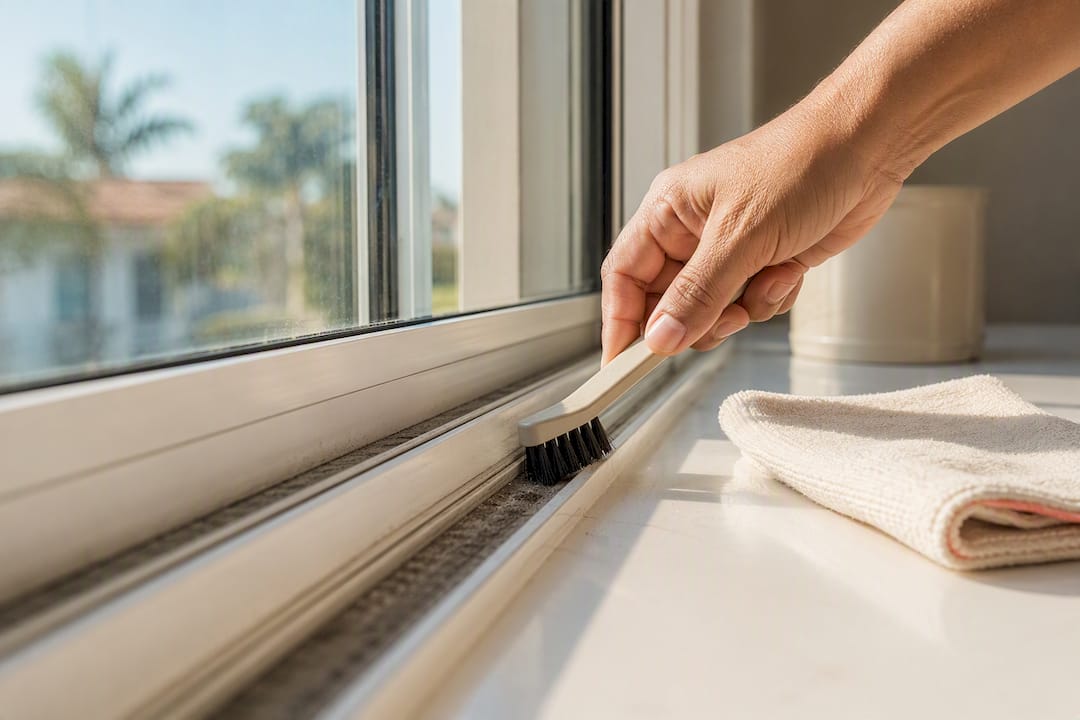
People usually book this service in a few specific situations: moving into or out of a property, resetting a home after a long stretch without professional cleaning, or tackling a heavy-use household where kids, pets, or frequent cooking have left their mark. Our deep cleaning versus standard cleaning breakdown walks through more of these scenarios if you want specifics for your situation.
What a Maintenance Clean Actually Covers
Maintenance cleaning keeps the surfaces you touch every day from sliding back into clutter and grime. It’s not a reset. It’s upkeep, and it only works well when the baseline is already solid.
A standard maintenance visit typically includes:
- Dusting furniture, shelves, and accessible surfaces
- Vacuuming carpets and rugs
- Mopping hard floors
- Wiping down kitchen counters and the outside of appliances
- Quick bathroom cleaning: toilets, sinks, mirrors, and tub surfaces
- Emptying trash bins throughout the home
How often you need this depends on how the space gets used. Households with kids, pets, or a lot of foot traffic tend to do best on a weekly schedule, since dust and grime rebuild fast. Biweekly service fits most standard households and is the most common choice. Monthly visits work for smaller homes, single occupants, or spaces that just don’t get dirty quickly; this aligns with insights on why tiny homes cost less to maintain over time from Gridwise Living. EPA guidance on indoor air quality notes that routine cleaning cadence has a direct effect on dust control and occupant comfort, which is a good argument for not stretching your interval too far. Our standard cleaning service page lists the full task scope if you want the granular version.
Where the Two Services Actually Diverge, Room by Room
The gap between these two services shows up clearly once you compare specific rooms. Maintenance handles the surface. Deep cleaning handles what’s underneath and behind it.
Kitchen. Maintenance wipes counters and the outside of appliances. A deep clean degreases cabinet fronts, pulls appliances forward to clean behind and underneath them, and tackles the buildup inside the microwave and oven.
Bathrooms. Maintenance covers a routine wipe of the toilet, sink, and mirror. A deep clean removes soap scum from tile and glass, descales faucets and showerheads, and gets into grout lines that have gone gray.
Everywhere else. Baseboards, air vents, interior windowsills, and the inside of appliances are deep-clean territory. They rarely show up on a standard maintenance checklist unless you specifically request them as an add-on.
Pro Tip: If a maintenance visit is skipping something you care about, like the inside of your microwave, just ask. Most providers will add it for a small fee rather than force you to book a full deep clean.
Why the First Visit Costs More (And for How Long)
A first cleaning almost always costs more per visit than a maintenance appointment, and the reason is straightforward: it takes more labor, more product, and more time on unfamiliar territory. Technicians are cleaning buildup they’ve never seen before in a space they don’t know yet, which slows everything down compared to a home they clean every two weeks.
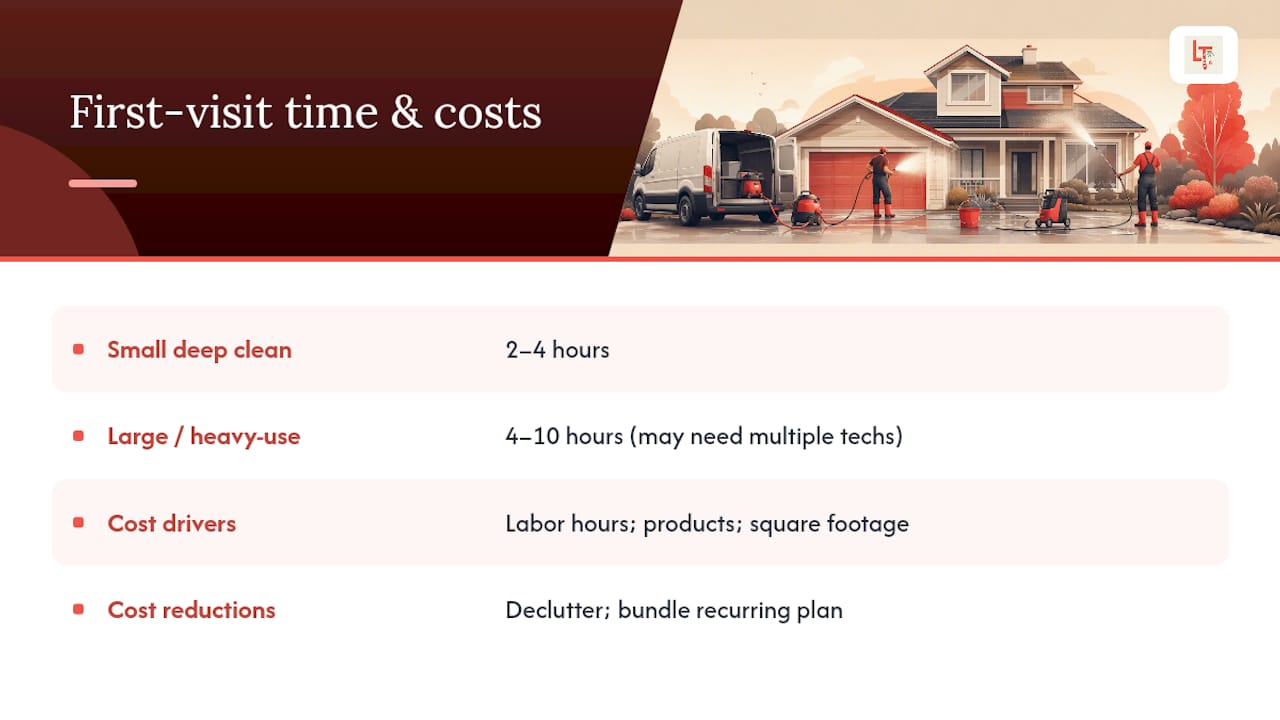
Time ranges vary widely depending on square footage and how neglected the space has been. A small deep clean might run 2 to 4 hours, while a larger or heavily used home can take 4 to 10 hours, sometimes with multiple technicians working at once. Cost drivers break down into three buckets: labor hours, cleaning products and equipment (degreasers, grout tools, appliance-safe solutions), and the sheer square footage involved.
You can lower the bill without cutting corners. Decluttering surfaces before the crew arrives saves real time. Bundling a deep clean with a recurring plan often unlocks discounted pricing, and committing to ongoing maintenance up front usually costs less over a year than booking one-off deep cleans repeatedly.
Signs You Need a Reset Now vs Starting With Maintenance
Not everyone needs the full deep-clean treatment right away. A short gut check can save you money if your space is already in decent shape.
Book a first (deep) clean now if:
- You can see buildup on baseboards, vents, or behind appliances
- Surfaces feel sticky or tacky to the touch, especially in the kitchen
- There’s a persistent odor that doesn’t clear with normal tidying
- It’s been more than six months since a professional cleaning
- You’re moving into or out of the property
Start with maintenance instead if the space is generally tidy, you’ve had a deep clean recently, and what’s left is just surface-level dust and daily mess. When you genuinely can’t tell which category you’re in, the safer call is to reset first, then enroll in recurring service. It costs less in the long run than guessing wrong and paying for a maintenance visit that can’t actually fix embedded grime.
Your Transition Plan: Reset First, Then Settle Into a Rhythm
Once the first clean is done, the real decision is choosing a cadence that matches how the space actually gets used. A weekly plan suits busy households with kids, pets, or frequent entertaining. Biweekly is a common cadence that suits many homes. Monthly visits generally work better for smaller spaces or lighter use.
Before the first visit, a little prep goes a long way:
- Clear countertops and floors of loose items so technicians can reach every surface
- Point out specific problem areas (that stubborn grout, the oven interior) in advance
- Ask for a time estimate so you can plan your day around the visit
Our prep guide for cleaning services covers this in more detail.
Pro Tip: Wipe down counters and run a quick sweep the night before a maintenance visit. It won’t replace the service, but it protects the reset between appointments and keeps grime from creeping back in.
Why the Reset Always Comes First
Most people treat “first clean or maintenance” as a coin flip, and that’s the part I disagree with. It’s not a toss-up. Skipping the reset and jumping straight into a biweekly plan is one of the most common ways homeowners waste money on recurring cleaning, because maintenance was never designed to remove years of embedded grime. It’s designed to protect a clean surface, not create one.
The pattern shows up constantly in industry guidance on one-time versus recurring cleaning: the reset-then-maintain sequence isn’t just a sales funnel, it’s genuinely the more efficient path. A crew working a maintained home moves faster, uses fewer products, and delivers a more consistent result than one fighting buildup every single visit. That efficiency is exactly what keeps recurring plans affordable over time.
Where I’d push back on conventional advice is the assumption that every space needs the full deep-clean treatment before starting maintenance. If you’ve had a legitimate professional clean in the last few months, skipping straight to a biweekly plan is fine. The reset only matters when there’s actually something to reset.
— Luka
Book Your Reset or Set Up Recurring Service
A straightforward path from “this needs work” to “this stays clean.” Skip the back-and-forth quoting calls: an instant estimator gives you a real number in about 60 seconds, based on your home’s size and the service you need.

Whether you’re staring down a heavy-buildup situation or just want your Saturdays back, the process works the same way. Start with a deep cleaning to reset the space, then roll into one of our recurring plans at a discounted rate. Every visit, first or maintenance, includes complimentary fridge cleaning at no extra charge, and you get the same local team each time instead of a rotating cast of strangers learning your home from scratch. Moving properties instead? Our move-in/move-out cleaning covers that reset specifically. Get your instant estimate now and pick a date that works.