
Hire or DIY? 3 Hybrid Cleaning Schedules for Homeowners

For most homes, the smartest move is a hybrid one: handle daily upkeep yourself and bring in professionals for deep cleans, move-outs, or anything involving grout, vents, and heavy stains. Hire out fast if you’re dealing with a health issue, mobility limits, or a hard deadline. DIY still wins for small spaces, quick resets, and tight budgets.
TL;DR:
- Hiring professionals for deep cleaning tasks like grout, vents, and move-out cleans is more cost-effective for busy or health-sensitive households.
- DIY cleaning costs include supplies and time, but the type of tasks you can handle yourself depends on space size and your physical limits.
- The typical professional cleaning costs between $80 and $250 per visit, with deep cleans reaching up to $600, while DIY expenses and time may add up similarly.
- Combining regular DIY upkeep with periodic professional deep cleans offers better results and cost savings than relying solely on either approach.
- Insurance, clear pricing, and staff background checks are crucial factors to confirm before hiring a cleaning service.
Table of Contents
- Hire Cleaners vs. DIY: Weighing the Real Trade-Offs
- What Does Hiring a Cleaner Actually Cost You?
- Which Cleaning Tasks Are Worth Hiring a Pro For?
- Building a Hybrid Cleaning Schedule That Actually Works
- When Should You Actually Call a Cleaner?
- Should You Rent a Carpet Machine or Hire a Pro?
- Why We Push Hybrid Plans Over an All-or-Nothing Choice
- How Limpieza Tropical Fits Into Your Cleaning Plan
- Sources
Hire Cleaners vs. DIY: Weighing the Real Trade-Offs
DIY cleaning saves cash but costs time, and that trade rarely gets stated honestly. You skip the invoice, but you’re also the one on your knees scrubbing grout at 9 p.m. on a Tuesday. CNBC’s reporting on paid help frames this as a value-of-time question: if your hourly rate at work beats what a cleaner charges, outsourcing tends to pencil out.
Professionals bring consistency you can’t easily replicate solo. They show up with commercial-grade equipment, carry insurance in case something gets damaged, and follow a routine built from cleaning hundreds of homes, not just yours. DIY gives you something different: full control over products, timing, and exactly which corners get attention.
There’s a physical cost to DIY that often goes unmentioned. Scrubbing tubs, moving furniture, and climbing to dust ceiling fans put real strain on knees, backs, and shoulders, especially for people managing repetitive tasks weekly.
- Cash outlay: DIY costs less upfront, but supplies and equipment add up over a year.
- Time cost: Every DIY hour is an hour not spent working, resting, or with family.
- Consistency: Pros follow checklists; DIY quality often slides when you’re tired or rushed.
- Physical toll: Repetitive scrubbing and awkward positions wear on joints over time.
What Does Hiring a Cleaner Actually Cost You?
Run the math before deciding, because “expensive” is relative to your own hourly value. The formula is simple: (hours spent cleaning × your hourly rate) + hard costs like supplies and equipment. If that number exceeds what a cleaner charges, hiring is the cheaper option, not the pricier one.
DIY hard costs add up faster than people expect. Budget roughly $20 to $40 a month for basic supplies (glass cleaner, disinfectant, mop pads), and if you’re renting a carpet extractor or steam cleaner occasionally, add $30 to $50 per rental day.
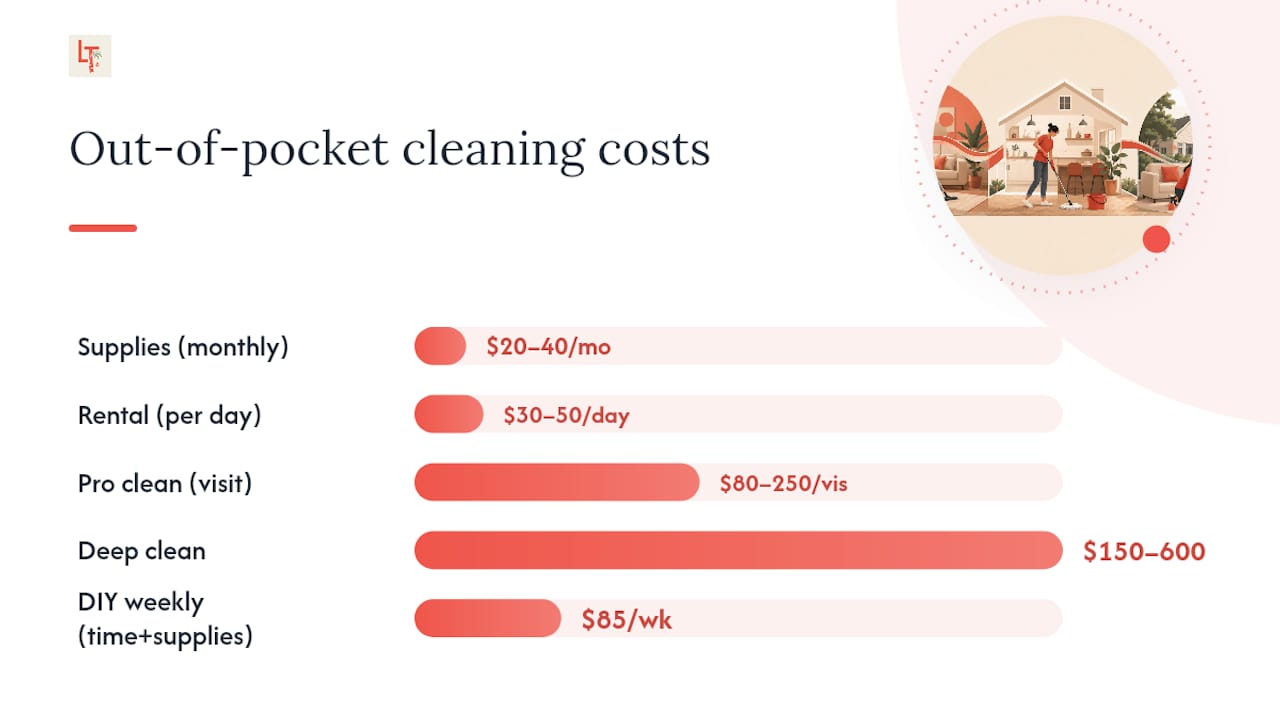
Recurring professional cleaning for a typical 2 to 3 bedroom home runs roughly $80 to $250 per visit, with deep cleans landing between $150 and $600 depending on size and condition.
Quick math example:
- Weekly DIY clean takes you 3 hours at a $25/hour personal time value = $75 in opportunity cost, plus $10 in supplies that week.
- A comparable pro visit for a 2,000 sq ft home runs roughly $120 to $180.
- The gap narrows once you count your own time honestly, and for busy earners, hiring often comes out ahead.
FreshlyFolded’s cost breakdown shows the same math applies to laundry: once you count water, electricity, and detergent, wash-and-fold services can break even with DIY, especially for larger households. Watch for hidden costs on both sides: minimum service fees, add-on charges for inside-oven or fridge cleaning, and machine wear from frequent rental use.
Which Cleaning Tasks Are Worth Hiring a Pro For?
Some chores genuinely need commercial tools or trained hands; others are fine to knock out yourself between visits. Sorting tasks this way keeps you from overpaying for simple upkeep or underestimating what a deep clean actually requires.
Best left to professionals:
- Carpet and upholstery deep cleaning (quarterly or after stains)
- Grout and tile scrubbing (every 3 to 6 months)
- Vent and duct dusting (annually)
- Move-in/move-out cleans (once per transition)
- Oven and fridge deep cleans (quarterly)
Fine for DIY:
- Daily tidying and dish duty
- Weekly bathroom wipe-downs and vacuuming
- Dusting surfaces and mirrors
- Trash and recycling rotation
Borderline, depends on your setup:
- Window washing (easy for single-story, riskier for multi-level homes)
- Laundry (fine solo, but our laundry add-on breakdown covers when bundling it with a cleaning visit saves a trip)
Health-sensitive jobs like mold removal or heavy allergen buildup deserve professional attention regardless of budget.
Building a Hybrid Cleaning Schedule That Actually Works
The research on hybrid cleaning plans points to one clear pattern: pairing regular DIY upkeep with periodic professional deep cleans beats going all in on either approach. It costs less than weekly professional visits and produces better results than DIY alone, because the deep-clean tasks people skip (baseboards, grout, vents) actually get done.
Try one of these cadences:
- Weekly DIY + annual deep clean: Handle daily upkeep yourself, book one thorough professional deep clean per year. Budget $150 to $400 annually beyond supplies.
- Biweekly pro visit + DIY touch-ups: Let pros handle the heavy lifting every two weeks; you fill gaps with light tidying. Budget $160 to $500 monthly depending on home size.
- Monthly pro + weekly DIY reset: A middle ground that keeps allergens and grime from building up between visits.
Pro Tip: Prioritize carpets, ovens, and grout on your first professional booking. These are the tasks DIY tools handle worst, and neglecting them shortens the lifespan of flooring and appliances.
When Should You Actually Call a Cleaner?
Certain triggers make hiring the obvious call rather than a maybe: moving in or out, finishing a renovation, managing a health condition that limits mobility, or facing a stain you can’t shift after two attempts. Waiting past that point usually just means a longer, pricier visit later.
Before booking, ask a potential cleaner:
- Are you insured and bonded, and do you run background checks on staff?
- What’s included in the standard visit versus what counts as an add-on?
- What’s your cancellation and rescheduling policy?
- Do you charge hourly or flat rate, and how do you estimate time per room?
Pricing models each have trade-offs. Hourly rates protect you from overpaying for a quick job but can run long if the crew works slowly. Flat rates give cost certainty but sometimes mean rushed work on bigger homes. Our breakdown of hourly versus flat rate pricing walks through which model fits which situation.
For time expectations, a standard 2 to 3 bedroom home typically takes 2 to 3 hours; a full deep clean often runs 4 to 10 hours depending on condition and crew size. Tipping isn’t mandatory, but $10 to $20 per visit or 15 to 20 percent for a deep clean is common practice. Red flags worth walking away from: no proof of insurance, vague pricing that shifts after arrival, or reluctance to answer basic questions.
Should You Rent a Carpet Machine or Hire a Pro?
Rental machines have their place, but they underperform commercial equipment more often than people expect. Comparisons of DIY versus professional carpet cleaning show rental units typically extract less moisture and dirt than commercial extractors, which can leave carpets damp longer and prone to mildew.
Rental misuse is common: oversudsing, using the wrong detergent, or running the machine too fast all reduce results and can clog the equipment.
Consumer Reports warns against DIY laundry hacks too, noting that vinegar and homemade additives can damage rubber parts in washing machines. Always check your appliance manual before improvising.
- Rental is fine for a light, one-off refresh between deeper cleans.
- Pros are worth the cost for heavy soiling, pet stains, or any hint of mold.
- Check appliance warranties before using unapproved cleaning products, since some manufacturers void coverage over misuse.
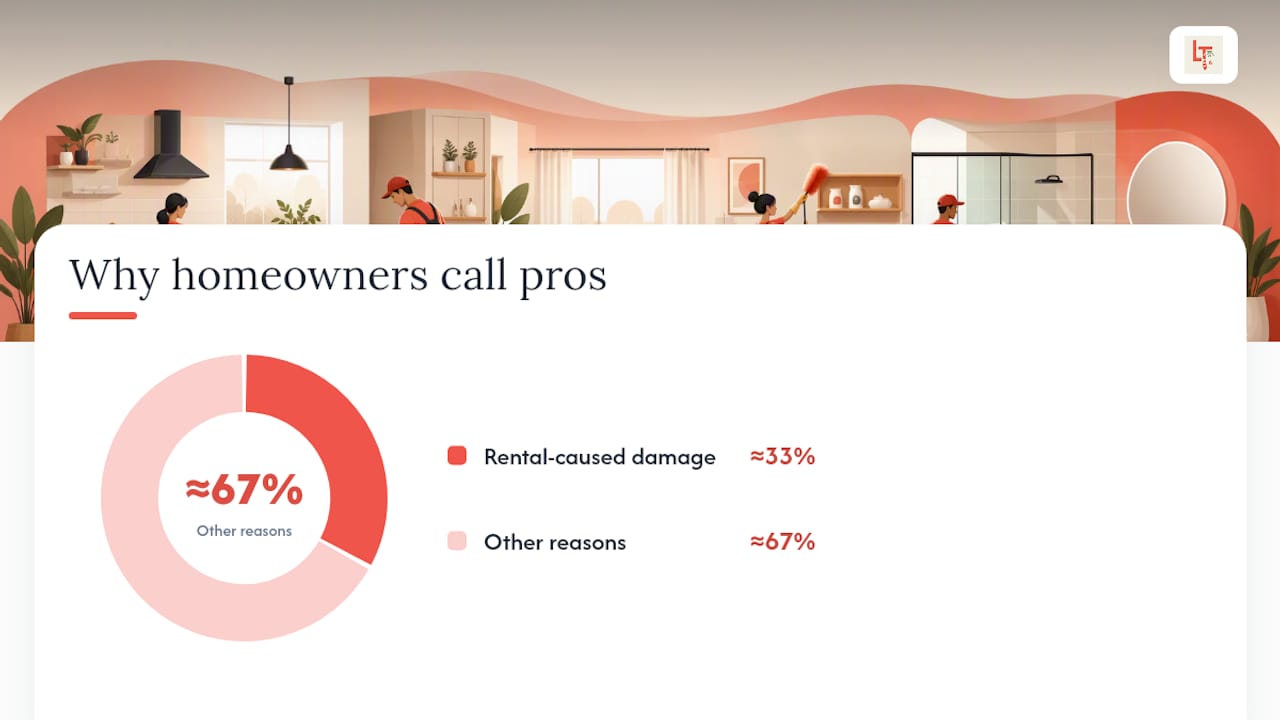
Roughly a third of carpet cleaning jobs referred to professionals involve fixing damage from prior rental attempts, according to CarpetTech’s comparison.
Why We Push Hybrid Plans Over an All-or-Nothing Choice
Most clients who try to do everything themselves eventually call us for the tasks they kept postponing: grout, ovens, move-out deep cleans. The ones who thrive combine a light DIY routine with a scheduled professional visit, whether that’s a recurring plan, a seasonal deep clean, or an Airbnb turnover between guests. That pattern shows up constantly in how people actually use cleaning services, not just how they say they will.
— Luka
How Limpieza Tropical Fits Into Your Cleaning Plan
Limpieza Tropical is built for exactly the hybrid approach this article recommends: you keep up with daily tidying, and we handle the deep-clean tasks that eat your weekend. Our standard cleaning, deep cleaning, and move-in/move-out services cover the exact jobs this guide flagged as pro-worthy, and every visit includes complimentary fridge cleaning at no extra charge.

Instead of guessing at a price, our instant estimation tool gives you a real number in 60 seconds, so you can run it against the cost math above before deciding. If you’re an Airbnb host juggling turnovers, our Airbnb turnover cleaning service fits between guest stays without you lifting a sponge. Busy households can lock in savings through our recurring cleaning plans, which cut per-visit costs for weekly, biweekly, or monthly bookings. Get your instant estimate and pick the cadence that matches your budget and your calendar.
Sources
For a deeper look at the numbers behind this decision, Consumer Reports covers laundry additive safety, while CNBC breaks down the time-value math behind outsourcing chores. Readers who want a broader cost comparison can check FindTrustedHelp’s guide, and those curious about greener options should read this eco cleaning comparison.
- Is it worth it to pay for a laundry service? | CNBC
- Findtrustedhelp
- Is Wash & Fold Worth It? | FreshlyFolded