
A Kitchen Deep Cleaning Checklist You Can Finish in One Afternoon

A focused kitchen deep cleaning checklist covers every zone from the fridge coils to the baseboards, and most homes can finish the whole thing in a few hours. That’s the real answer: fridge and freezer (30 to 60 minutes), oven and stovetop (30 to 60 minutes), cabinets and pantry (45 to 90 minutes), sink and dishwasher (20 to 30 minutes), counters and backsplash (20 minutes), floors (20 to 40 minutes), and the hidden stuff, vents, light fixtures, tops of cabinets (30 minutes).
Here’s the quick-scan version before you dive into the full checklist below:
- Empty and wipe the fridge and freezer, then vacuum the coils
- Soak oven racks, scrub the interior, wipe knobs and the range hood filter
- Pull everything from cabinets and the pantry, wipe shelves, toss expired food
- Clean the sink, disposal, and dishwasher filter
- Wipe counters, backsplash, and small appliances
- Sweep, mop, and hit the baseboards
- Dust vents, light fixtures, and the tops of cabinets
Pro Tip: Print the full checklist below with checkboxes and time blocks so you can track progress room by room and pick up where you left off if you split it across two days.
Key Takeaways
A printable, zone-by-zone kitchen deep-clean checklist paired with a realistic 3 to 6 hour time estimate is what turns a dreaded chore into a plan you can actually finish.
| Point | Details |
|---|---|
| Follow the sequence | Work top-down and dry-before-wet to avoid re-cleaning surfaces you already finished. |
| Budget your time | Allow 30 to 60 minutes each for the fridge and the oven, the two longest zones. |
| Clean before you sanitize | Wipe away visible mess first, then sanitize food-contact surfaces for real results. |
| Maintain between deep cleans | Daily, weekly, and monthly upkeep keeps quarterly deep cleans shorter and easier. |
| Hire out the heavy lifting | Limpiezatropical covers the full checklist with an instant estimate and free fridge cleaning included. |
Table of Contents
- Kitchen Deep Cleaning Checklist: Supplies and Prep
- How Do You Deep Clean a Kitchen Zone by Zone?
- What’s the Best Kitchen Cleaning Schedule to Follow?
- Are There Sanitation Rules That Actually Matter Here?
- How Should You Actually Use the Printable Checklist?
- Skip the Scrubbing: Book a Professional Deep Clean Instead
- Sources
Kitchen Deep Cleaning Checklist: Supplies and Prep
Before you touch a sponge, gather what you need so you’re not hunting for a scrub brush mid-task. You’ll want an all-purpose cleaner, dish soap, white vinegar, baking soda, microfiber cloths, a scrub brush, an old toothbrush for tight corners, rubber gloves, a bucket, a vacuum with a brush attachment, trash bags, and a box for anything you’re donating or tossing.
Safety comes first. Open a window or run the exhaust fan, since you’ll be working with stronger cleaners in a closed space. Wear gloves, and add eye protection if you’re using anything with bleach. Unplug small appliances before you clean around them, and switch off the fridge at the outlet before you get near the coils.
Then prep the space itself:
- Clear every countertop completely
- Empty the sink and load or run the dishwasher first
- Move perishables to a cooler if the fridge clean will take a while
- Set out trash bags and a recycling bin
- Pre-sort pantry items into keep, donate, and toss piles
Pro Tip: Fill the sink with hot, soapy water before you start. Drop in oven racks or the microwave tray so they’re soaking while you tackle another zone.
If your cabinet doors or interior wood trim need special attention, gentler cleaning methods for wood surfaces prevent stripping the finish, especially on painted or stained doors.
How Do You Deep Clean a Kitchen Zone by Zone?
This is the core of any real kitchen deep clean list: work top-down and dry-before-wet, so crumbs and dust fall onto surfaces you haven’t cleaned yet instead of the ones you just finished. That sequencing logic comes straight from professional cleaners, and it’s the single biggest reason DIY deep cleans take longer than they should when people skip it, according to HomeNerdy’s cleaning sequence guide.
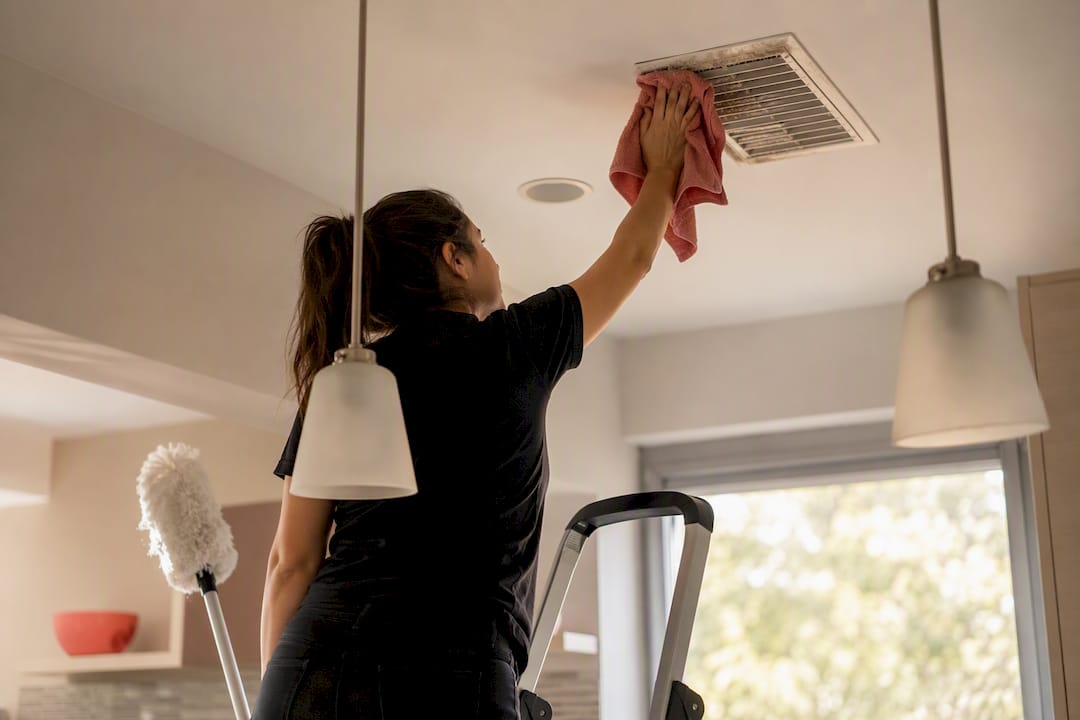
Ceiling, light fixtures, and vents (15 to 20 minutes)
Dust light fixtures and wipe down vent covers or returns. If your range hood has a removable filter, pull it and soak it in hot, soapy water while you move to the next zone.
Tops of cabinets (10 minutes)
This spot collects greasy dust that most people never touch. Wipe it down with a degreaser, then line it with parchment paper or paper towels. Next time, you peel off the liner instead of scrubbing sticky residue, a trick pulled directly from Tasting Table’s hidden-spot cleaning method.
Refrigerator and freezer
Empty everything, checking dates as you go. Remove shelves and drawers and let them soak in warm soapy water. Wipe the interior with a mild vinegar solution, since it cuts odor without leaving a chemical smell near food. Then unplug the fridge, pull it slightly from the wall if you can, and vacuum the condenser coils with a brush attachment. Martha Stewart’s deep-clean guide notes this small step improves cooling efficiency and can extend the appliance’s life.
Oven, stovetop, and range hood
For heavily soiled racks, soak them in a tub of hot water with a couple of dishwasher detergent tablets for two hours, turning once, then scrub lightly. That soak does most of the work for you. For baked-on grime inside the oven, a baking soda and water paste left to sit for several hours breaks down grease without harsh fumes. Wipe knobs and the stovetop, and reinstall the range hood filter once it’s dry.
Dishwasher and sink (20 to 30 minutes)
Pull the dishwasher filter and rinse it under hot water, then run an empty cycle with a dishwasher cleaner or a bowl of vinegar on the top rack. In the sink, clean the disposal by grinding ice cubes with a bit of dish soap, and unscrew the faucet aerator to clear mineral buildup. This is also the moment to replace or sanitize your sponge. Kitchen sponges harbor more microbes than almost anything else in the house, and USDA guidance on sponge care recommends microwaving a damp sponge for one minute daily or running it through the dishwasher, and replacing it every couple of weeks regardless.
Cabinets, drawers, and pantry
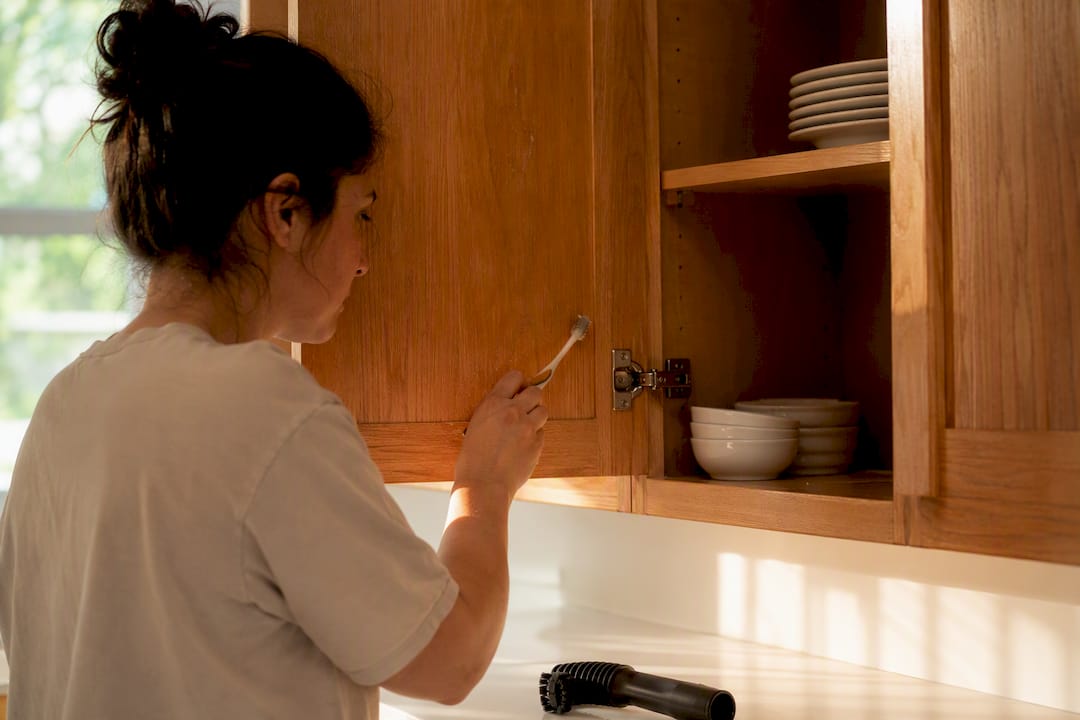
Empty one cabinet at a time so you’re not staring at a countertop full of chaos. Vacuum crumbs, wipe shelves, and use your toothbrush on hinges and handle hardware. In the pantry, toss expired food, wipe shelves, and consider lining them for easier cleanup next round.
Countertops, backsplash, and small appliances (20 to 30 minutes)
Grease on a backsplash usually responds to a degreaser and some elbow grease, but test any new product on a small hidden spot first, especially on natural stone or sealed wood, where the wrong cleaner can dull or etch the finish. Wipe down the microwave (a bowl of water and lemon steamed for a few minutes loosens stuck-on food before you wipe), the toaster, and the coffee maker, running a vinegar cycle through the reservoir if it hasn’t been descaled in a while.
Floors, trash, and final touches
Sweep or vacuum before mopping. For grout that’s gone gray or moldy, a baking soda paste with a stiff brush usually lifts it without bleach. Wipe down the trash can inside and out, wash the recycling bin if it’s grimy, and finish with door handles and light switches, since those get touched more than almost anything else in the room.
What’s the Best Kitchen Cleaning Schedule to Follow?
A deep clean only stays “deep” for so long. The real trick to making this checklist last is spreading light maintenance across the weeks in between, so you’re never facing the same level of buildup twice. The Spruce’s frequency guidance breaks kitchen upkeep into a layered rhythm that most households can actually stick to.
Daily:
- Wipe counters and the stovetop after cooking
- Clean the sink before bed
- Wipe high-touch handles and switches
- Quick sweep of visible crumbs
Weekly:
- Clean the microwave inside and out
- Wipe exterior of all appliances
- Sweep and mop the full floor
- Wipe cabinet fronts
- Wash the trash bin
Monthly:
- Spot-clean fridge shelves and drawers
- Clean the dishwasher filter
- Wash the range hood filter
- Deep wipe small appliances
- Spot-treat visible grout stains
Quarterly or seasonal:
- Fully empty and wipe the fridge and freezer
- Deep scrub the oven interior and racks
- Wipe tops of cabinets and vents
- Clean baseboards
- Purge and reorganize the pantry
Spring cleaning your kitchen or prepping before holiday cooking are both natural triggers for the seasonal pass. Assign weekly tasks to different family members using the printable’s checkboxes, and block off a weekend afternoon for the quarterly deep clean so it doesn’t quietly get skipped.
Are There Sanitation Rules That Actually Matter Here?
Yes, and they’re simpler than most people assume. The order matters more than the product. USDA guidance recommends cleaning surfaces first and sanitizing second, since a sanitizer applied to a greasy or crumb-covered surface can’t actually reach the bacteria underneath it. Wipe away visible mess with soap and water, then follow with a sanitizing solution on surfaces that touch food.
Foodsafety, clean, separate, cook, chill, puts cleaning first for a reason: it’s the step that prevents the other three from being undermined.
A few professional habits worth borrowing: remove cabinet hardware occasionally to clean underneath it, since grime collects where fingers grip most. Vacuum fridge coils every few months, not just during deep cleans, for better appliance efficiency. And always soak the hardest task, like oven racks, while you’re actively working on something else.
On safety, CDC guidance on home cleaning is direct: follow label instructions on any disinfectant, never mix bleach with ammonia or vinegar, and ventilate the room the entire time you’re using it. Unplug appliances before servicing their interiors, and check manufacturer instructions before using anything abrasive on a self-cleaning oven or natural stone counter.
How Should You Actually Use the Printable Checklist?
Print it on standard letter paper with checkboxes next to each task and a blank line for notes or the time you finished, so you can track what’s left if you split the job. Use the per-zone time estimates above to decide: one long 4 to 6 hour session, or two shorter 2 to 3 hour sessions across a weekend.
If a marathon session sounds exhausting, try the 20/10 rule: clean for 20 minutes, break for 10. It keeps energy up during a long list.
- Start with your soaking tasks (racks, aerator, filters)
- Work top-down while things soak
- Pair active scrubbing with passive soak time
- Save floors for last
DIY or hire it out?
Small kitchens and routine seasonal resets are fine to DIY. But heavy grease buildup, move-in or move-out turnovers, or a schedule that leaves no real free afternoon are exactly when professionals earn their keep. A move-out cleaning checklist shows how much more ground a trained team covers in less time. If that’s you, the next section covers what a pro visit actually looks like.
Skip the Scrubbing: Book a Professional Deep Clean Instead
If reading that oven-rack soak time made you tired just thinking about it, Limpiezatropical handles the whole checklist for you, and the fridge cleaning that most people dread is included free with every visit, no exceptions and no upsell.

Limpiezatropical’s instant estimate tool gives you a real price in under a minute, no waiting for a callback to find out what a deep clean costs. A local Miami-based team shows up with their own supplies and tackles the fridge coils, oven interior, and cabinet grime the same way this checklist outlines, just faster, because it’s what they do all day. If you’re prepping for a move, an Airbnb turnover between guests, or you just want the kitchen off your plate on a recurring basis, flexible cleaning plans make it easy to stop redoing this deep clean from scratch every few months. Get your estimate and pick a date that works.
Sources
- Clean then sanitize: one-two punch to stop foodborne illness | USDA
- Foodsafety
- How to Deep Clean Your Kitchen From Top to Bottom | Martha Stewart
- How to Deep Clean Your Kitchen: Full Sequence (2026) | HomeNerdy