
Maid vs Cleaner: Hire a Cleaning Professional with This Checklist
Hire a housekeeper when you want ongoing help managing your household. Hire a cleaner (or a cleaning company) when you need periodic deep cleaning without the daily oversight of a household worker. The term “maid” gets used for both today, which is exactly why the label matters less than the task list you write before you hire anyone.
TL;DR:
- A housekeeper typically manages daily household tasks on a recurring schedule, including laundry and errands, while cleaners focus on specific deep cleaning visits.
- The duties of maids, cleaners, and housekeepers overlap mainly on core cleaning tasks, but non-cleaning responsibilities like grocery shopping are usually exclusive to housekeepers.
- Costs vary with home size, scope, and frequency, with housekeepers usually paid hourly and cleaning services charging flat rates per visit.
- Always specify a detailed task list before hiring, and check if the provider offers insurance, background checks, and supplies, especially for individual hires.
- Industry guidance suggests choosing a housekeeper for ongoing household management and a cleaning service for periodic deep cleans or one-time projects.
Table of Contents
- Maid vs Cleaner vs Housekeeper: The Real Definitions
- What Each Role Actually Does (and Doesn’t Do)
- How to Choose Between a Housekeeper, Cleaner, or Company
- What a Maid vs Cleaner Actually Costs
- How a Vetted Cleaning Service Covers Every Scenario Above
- Respectful Language and Working Well With a Cleaning Professional
- Get an Instant Estimate for Your Next Cleaning
- Sources
Maid vs Cleaner vs Housekeeper: The Real Definitions
I’ll be straight with you: the confusion around these three words is not your fault. The industry itself has been sloppy about it for decades.
A housekeeper typically works on a recurring schedule, often weekly, and handles the rhythm of a household: laundry, dishes, tidying, sometimes light meal prep. Think of them as the person who keeps daily life running, not the person who scrubs grout once a quarter.
A cleaner (or a house cleaning service) usually focuses on a defined block of tasks during a scheduled visit: bathrooms, kitchens, floors, dusting, and deeper jobs like baseboards or inside appliances. Cleaners tend to bring their own supplies and equipment, and many operate through companies rather than as solo hires.
Maid is the oldest and vaguest of the three terms. Historically it described live-in or day domestic help. Now it’s used interchangeably with both of the roles above, which is part of the problem. Industry guidance increasingly recommends dropping it altogether in favor of “cleaning professional,” a term that respects the skill involved and avoids the outdated, gendered baggage the word carries, according to Care.
Here’s the part that actually matters more than any dictionary definition:
- Duties depend entirely on the written agreement, not the job title
- A “maid service” might do a full deep clean or a light tidy, depending on the company
- A “housekeeper” hired privately might also do laundry and errands, or might not
- Always get a task list in writing before the first visit
Titles are a starting point for a conversation, not a contract.
What Each Role Actually Does (and Doesn’t Do)
This is where most hiring mistakes happen. Someone books a “cleaner” expecting daily tidying, or hires a “housekeeper” expecting a deep bathroom scrub, and both sides end up frustrated.
Core cleaning tasks (dusting, vacuuming, mopping, wiping counters) show up in almost every arrangement, whether you call the person a maid, cleaner, or housekeeper. The overlap ends there. O*NET’s occupational profile for maids and housekeeping cleaners lists duties like making beds, replenishing linens, and vacuuming carpets as standard, which tracks with what most standard visits cover.
Non-cleaning tasks split the two roles apart:
- Laundry and folding: common for housekeepers, rare for one-time cleaners
- Dishes and kitchen upkeep: often included with housekeeping, sometimes excluded from cleaning packages
- Errands or grocery pickup: almost exclusively a housekeeper task
- Meal prep or organizing closets: negotiated separately, and closer to what a professional organizer handles than a standard cleaning visit
Specialty jobs like carpet shampooing, upholstery cleaning, or the inside of ovens and refrigerators usually cost extra and require different equipment. If air quality or allergens are a concern, ask whether the crew uses HEPA-filtered vacuums; the EPA’s guidance on HEPA filters explains why that filtration matters for trapping fine particles a standard vacuum recirculates.
Supplies are another dividing line. Company-based cleaners typically bring their own products and equipment. Independently hired housekeepers often use whatever is already under your sink, unless you’ve agreed otherwise.
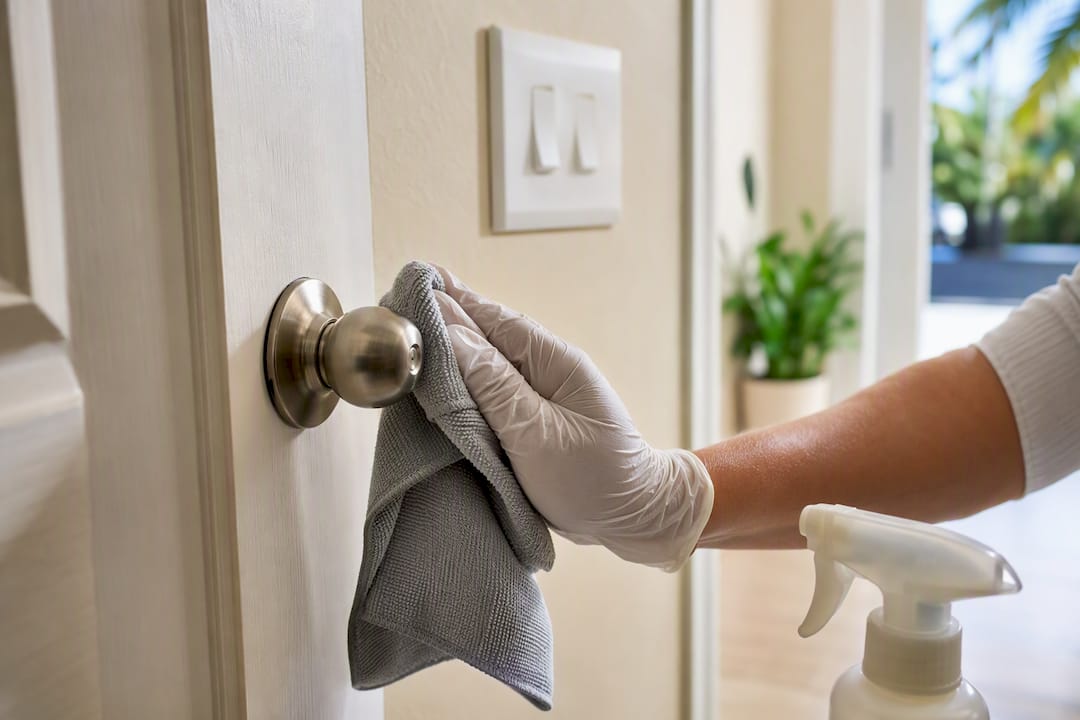
Pro Tip: Ask about disinfection specifically, not just “cleaning.” The CDC distinguishes cleaning from disinfecting, and only the second one targets high-touch surfaces like doorknobs and light switches with a disinfectant, not just soap and water.
How to Choose Between a Housekeeper, Cleaner, or Company
Pick based on the shape of the problem, not the label on the job posting.
- You need ongoing household management (laundry, dishes, daily tidying) → hire a housekeeper on a recurring schedule.
- You need a periodic deep clean without managing someone day to day → hire a cleaning service, generally through a deep cleaning provider rather than a solo hire.
- You need a specific one-off job (move-out clean, Airbnb turnover, post-renovation dust) → hire a company built for that exact scenario.
Industry guidance frames this same choice around consistency versus involvement: a cleaning service suits people who want reliable deep results without personal management, while a housekeeper suits households that need daily operational help, according to GetYou’s comparison of the two roles.
Before you hire anyone, ask:
- Are you insured and bonded?
- Do you run background checks on staff?
- Who supplies cleaning products and equipment?
- What’s your cancellation and damage policy?
- Can you provide references or reviews?
One more thing worth ten minutes of research: if you hire an individual directly and pay them regularly, you may become a household employer under tax law, with payroll obligations most people don’t anticipate. Hiring through a company shifts that liability to the business, which typically carries its own insurance, bonding, and payroll compliance instead of leaving it on you.
What a Maid vs Cleaner Actually Costs
Pricing structure tells you almost as much as the price itself.
Housekeepers are usually paid hourly, with rates that vary depending on region and scope. Cleaning services more often charge a flat per-visit rate, which also varies by job and location, according to Angi’s cost breakdown.
What drives the range:
- Home size and number of bathrooms
- Current clutter level (a first visit almost always costs more)
- Add-ons like inside-oven cleaning or laundry
- One-time visit versus a recurring plan, which usually comes with a discount
A typical standard cleaning visit for a mid-size home runs one to two hours per cleaner, while a full deep clean can run three to five hours depending on how much buildup there is.
How a Vetted Cleaning Service Covers Every Scenario Above
Every scenario in this article, from the weekly upkeep question to the one-time deep clean, maps to something Limpiezatropical is built to handle. Instead of guessing at hourly rates, you can use an instant estimation tool to get a cost quickly, without waiting for callbacks.
Services line up directly with the decision points above.
Each visit uses the same team, includes supplies, and comes with complimentary fridge cleaning.
Respectful Language and Working Well With a Cleaning Professional
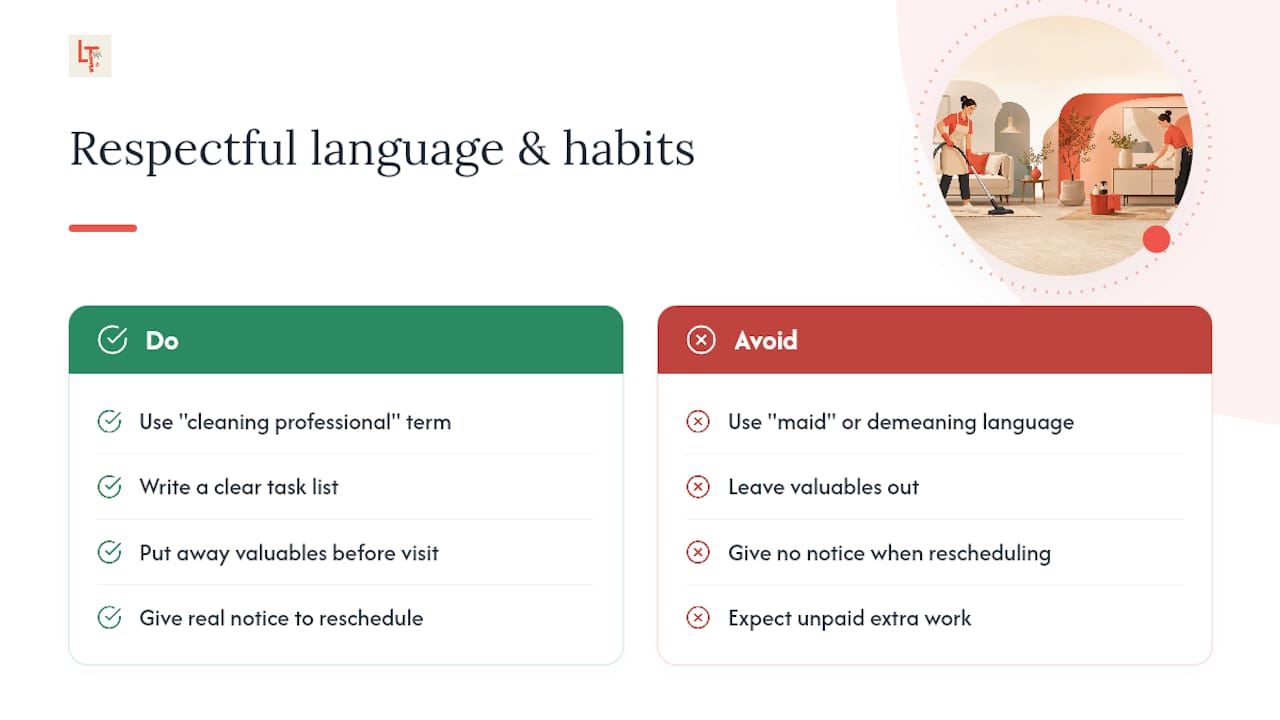
I lean toward “cleaning professional” over “maid,” and not out of politeness for its own sake. The word “maid” carries a history of undervaluing skilled labor, and the people doing this work today are running a trade, not performing servitude.
Practically, that respect shows up in small habits: write a clear task list, put away valuables before a visit, and give real notice if you need to reschedule. If someone consistently exceeds the brief, a tip or small bonus goes further than you’d think toward a good working relationship.
— Luka
Get an Instant Estimate for Your Next Cleaning
Whatever this article helped you decide, whether it’s recurring housekeeping-style upkeep or a one-time deep clean, Limpiezatropical covers the range without forcing you to guess at pricing over the phone. Standard visits, deep cleans, move-in/move-out jobs, and Airbnb turnovers all run through the same instant estimation tool.

You get a real number in about 60 seconds, the same local team assigned to your home, supplies included, and complimentary fridge cleaning with every visit. If you’re comparing a recurring housekeeping arrangement against a scheduled deep clean, the cleaning plans page lays out recurring discounts, while the main services page covers every task type this article walked through. Get your estimate now and book the option that actually matches your task list.
Sources
- Care
- CDC — When and how to clean and disinfect your home
- EPA — What is a HEPA filter?
- O*NET — Maids and Housekeeping Cleaners (37-2012.00)
- Angi — Should I hire a house cleaner or housekeeper?