
Match Cleaning to Use: Office Cleaning Frequency with Weekly Templates
Restrooms, trash, and high-touch surfaces need daily attention, full stop. Most offices need professional cleaning several times per week depending on headcount and foot traffic, with a deep clean scheduled periodically and more often for high-traffic or regulated spaces. Start by sizing up your headcount, your busiest zones, and your industry, then pick a tier from there.
TL;DR:
- Offices with high public foot traffic or shared surfaces require daily cleaning of bathrooms, trash, and high-touch areas, regardless of size.
- Deep cleaning tasks like carpet extraction or window washing should be scheduled quarterly to biannually, especially in high-traffic or regulated spaces.
- Cleaning schedules should prioritize high-use zones such as entryways, restrooms, and kitchens, with less frequent focus on private offices or storage areas.
- Hybrid or fluctuating schedules benefit from zone-based cleaning that adjusts frequency according to daily or weekly occupancy patterns.
- Mismatched cleaning routines can lead to inefficiencies, such as over-cleaning low-traffic rooms while neglecting essential high-touch areas.
Table of Contents
- What Determines Office Cleaning Frequency?
- How Often Should Each Area of the Office Be Cleaned?
- Sample Cleaning Schedules by Office Size and Industry
- How to Build a Cleaning Schedule for Your Office
- When Do You Need Deep Cleaning and Disinfection?
- Why Cleaning Frequency Affects Your Bottom Line
- What Most Offices Get Wrong About Cleaning Schedules
- Get an Office Cleaning Schedule Built Around How You Actually Use Your Space
- Sources
What Determines Office Cleaning Frequency?
Two offices with the same square footage can need wildly different schedules. A 20-person law firm with private offices and a 20-person call center with hot desks and a lobby full of visitors are not the same cleaning job, even if the floor plans look identical on paper.
Headcount versus foot traffic is the first fork in the road, and traffic usually wins the tie. A quiet back-office team of 15 might get by with three visits a week. A reception area seeing 60 visitors a day needs daily attention even if only 8 employees sit behind that desk. When the two numbers disagree, weight the one tied to public or shared-surface contact.
Industry and regulation set a floor, not a ceiling. Medical offices, dental practices, and any space handling food service have to meet sanitation standards that push cleaning frequency up regardless of headcount. A five-person urgent care clinic still needs daily disinfection protocols that a twenty-person marketing agency down the hall does not.
Layout changes the math too. Open-plan offices concentrate dust, crumbs, and shared-surface contact across fewer square feet of actual desk space, which tends to call for more frequent light cleaning. Private offices with assigned desks spread that same mess out and can often stretch to less frequent visits, as long as shared areas still get daily coverage.
Hybrid schedules complicate the picture. A half-empty office on Mondays and Fridays with a packed floor Tuesday through Thursday doesn’t need the same cleaning intensity every day. Zone-based cleaning that flexes by day of the week tends to save money without leaving high-use days under-serviced.
Budget and timing constraints round out the picture:
- Overnight cleaning avoids disrupting the workday but limits vendor flexibility for mid-day emergencies.
- In-hours cleaning costs more in labor but catches spills and high-touch surfaces in real time.
- Recurring contracts almost always beat one-off bookings on price per visit.
- Adding mid-day restroom or break room checks costs less than most managers assume, especially bundled into an existing contract.
How Often Should Each Area of the Office Be Cleaned?
Not every square foot of your office earns the same attention, and treating them all the same is how budgets get wasted on rooms nobody uses while restrooms fall behind. Break the job down by task and frequency instead of by blanket “clean the office” instructions.
Daily, no exceptions:
- Restrooms: full sanitation of toilets, sinks, floors, and restocking of supplies.
- Trash and recycling: empty and reline every bin, every day.
- High-touch surfaces: door handles, light switches, elevator buttons, shared phones, and keyboards.
- Kitchen and break room counters, sinks, and microwave exteriors.
- Entryway floors and mats, especially in wet or high-traffic weather.
Several times a week (rotate across visits):
- Workstation surfaces and desk phones, especially in shared or hot-desk setups.
- Conference room tables, chairs, and whiteboards after heavy meeting use.
- Vacuuming carpeted walkways and common areas.
- Glass partitions and interior windows near entrances.
Weekly:
- Baseboards, vents, and light fixture dusting.
- Break room appliance interiors, including microwave and refrigerator wipe-downs.
- Detailed reception area cleaning, including furniture and décor surfaces.
Monthly to quarterly:
- Carpet extraction in low-traffic areas.
- Blind and window treatment cleaning.
- Exterior window washing, particularly for ground-floor and showroom-facing offices.
- HVAC vent and filter checks to catch dust buildup before it affects air quality.
If your office runs a busy front desk or a break room that gets slammed at lunch, a mid-day top-up on restrooms and trash is worth the extra line item. It’s a small addition to a nightly contract and it’s the difference between a bathroom that looks fine at 9 AM and one that still looks fine at 4 PM.
Pro Tip: Map your task list against your busiest days before you ask a vendor for a quote. Paying for daily deep vacuuming in a conference room used twice a week is money you could redirect toward more frequent restroom service instead.
Mapping tasks to frequency this way is also how you control costs without cutting corners. A cleaning budget spread evenly across every room, regardless of use, almost always underserves your busiest spaces while overserving your quietest ones.
Sample Cleaning Schedules by Office Size and Industry
Facility-care guidance generally splits offices into three frequency tiers based on size and traffic, and most guides converge on similar ranges: small offices around 1 to 3 visits a week, medium offices 2 to 5, and large or dense environments daily.
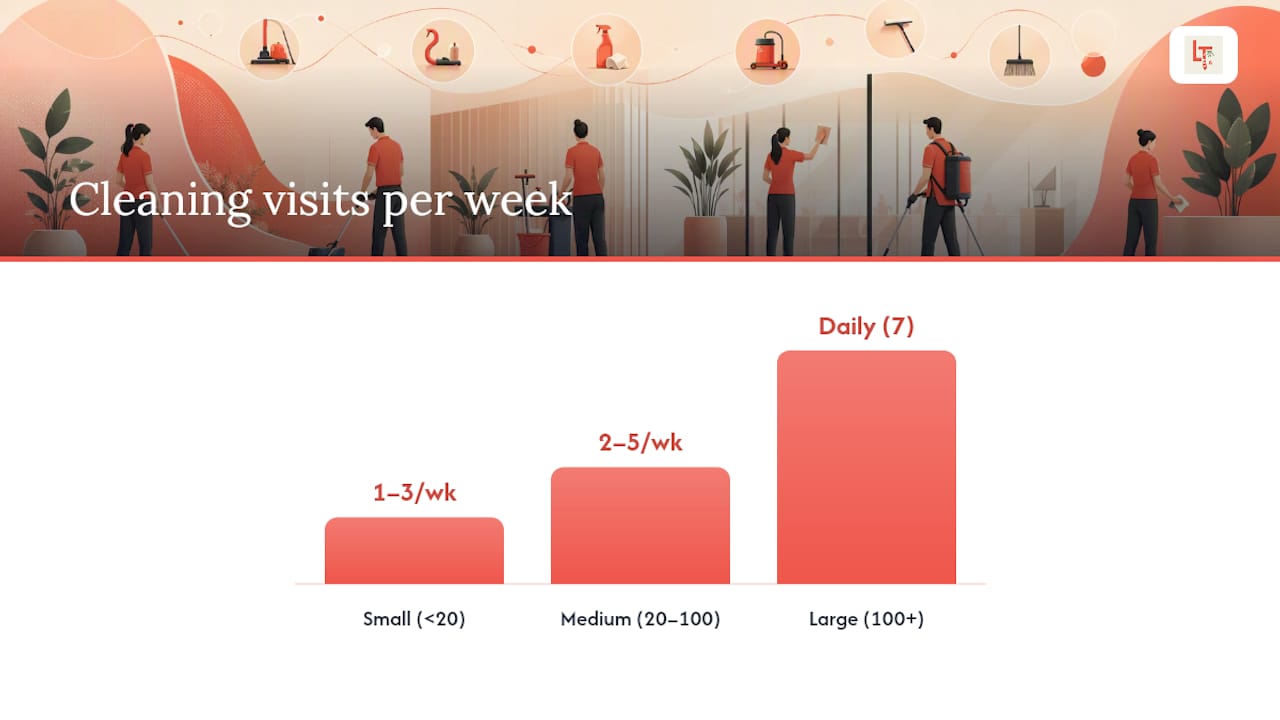
Small office (under 20 employees, low visitor traffic): A weekly or twice-weekly professional visit combined with daily staff micro-tasks, like emptying personal trash bins and wiping down a shared coffee station, often covers appearance and hygiene needs without the cost of nightly service.
Sample week: Monday: full clean including restrooms and kitchen. Wednesday: restroom and trash check plus desk-area vacuum. Friday: full clean before the weekend.
Medium office (20 to 100 employees, moderate to high traffic): Alternate area coverage across three to five visits a week works well here. Restrooms and kitchens get daily attention while workstations and conference rooms rotate through the schedule.
Sample week: Monday, Wednesday, Friday: full office clean. Tuesday, Thursday: restroom, trash, and kitchen touch-up only.
Large office (100+ employees, dense or public-facing): Daily cleaning across the board, with mid-day touch-ups for lobbies, restrooms, and break rooms during peak hours. This tier also tends to justify an on-site porter for real-time spill and restocking response.
- Professional services and tech offices with hybrid schedules can often shift toward the lower end of their tier, since desk usage varies day to day.
- Call centers with dense, shift-based seating usually need to sit at the higher end, since desks rarely sit empty.
- Medical offices need daily disinfection regardless of size, driven by regulation rather than headcount.
- Retail showrooms and client-facing spaces often need daily floor and glass cleaning to maintain a polished first impression, even at low headcounts, so understanding how often you should pressure wash your home can be a useful guide for exterior maintenance.
How to Build a Cleaning Schedule for Your Office
Setting the right cadence isn’t guesswork if you audit the right things first. Walk through this process before you sign a contract or revise an existing one.
- Audit your baseline. Count headcount, estimate daily visitor footfall, and pull any complaint history from the last few months. If restrooms or break rooms come up repeatedly in feedback, that’s your first signal frequency is too low.
- Identify high-use zones. Reception, restrooms, and kitchens almost always need more frequent service than private offices or storage rooms.
- Draft a scope of work. List every task by area and assign a frequency, using the area-by-area breakdown above as a starting template.
- Balance daily maintenance against periodic deep tasks. Trim professional visit frequency slightly if it lets you fund an annual or biannual deep clean, rather than stretching both thin.
- Set KPIs and a review cadence. Track visible cleanliness, restocking consistency, and staff complaints. Reviewing your schedule quarterly catches drift before it becomes a recurring problem.
When you’re ready to brief a vendor, keep it specific: “We have 45 employees across an open-plan floor with one conference room and a client-facing lobby. We need daily restroom and kitchen service, three-times-weekly desk and floor cleaning, and a biannual carpet extraction.” That level of detail gets you an accurate quote instead of a generic package.
Pro Tip: Ask any vendor how they handle mid-contract frequency changes. A provider that locks you into a rigid schedule for a full year can’t flex when your headcount grows or your office goes hybrid.
When Do You Need Deep Cleaning and Disinfection?
Deep cleaning covers work your regular schedule doesn’t touch: carpet extraction, upholstery cleaning, floor stripping and waxing, and ductwork inspection. It runs on its own calendar, separate from daily and weekly maintenance, and treating it as ongoing asset care rather than an occasional extra tends to extend the life of flooring and furniture significantly.
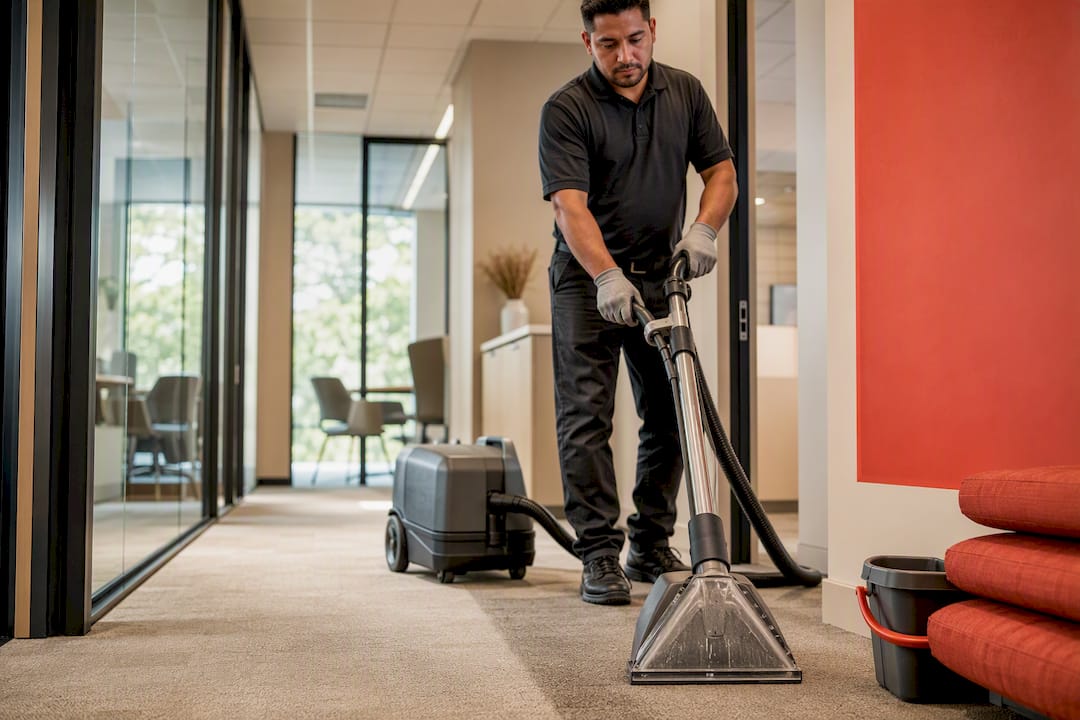
Most offices should schedule periodic deep cleaning regularly. High-traffic floors, medical facilities, or food-service spaces often need it more frequently, sometimes quarterly for carpet extraction alone.
Certain events call for immediate disinfection outside your normal calendar:
- A confirmed illness outbreak among staff.
- A food-safety incident in a shared kitchen.
- Any bodily-fluid cleanup, which requires documented protocol regardless of office size.
Given that employer costs tied to worker illness and injury run an estimated $225 billion annually across the workforce, the cost of an emergency disinfection visit is trivial by comparison. Document every event: date, area, method used, and who was notified. That paper trail matters if a health question comes up later.
Why Cleaning Frequency Affects Your Bottom Line
The $225 billion annual cost tied to employee illness and injury isn’t abstract. It’s sick days, reduced output, and the cost of covering for absent staff. Restroom and high-touch surface neglect are direct contributors.
Beyond health, cleanliness shapes how visitors and clients judge your business in the first ten seconds they’re in the door. A grimy reception area undoes a polished pitch fast.
On cost: frequent light cleaning generally beats infrequent deep cleaning for both budget and appearance, since it prevents buildup that later requires expensive remediation. Think of it as maintenance spending now versus repair spending later.
What Most Offices Get Wrong About Cleaning Schedules
The mistake I see most often isn’t too little cleaning. It’s mismatched cleaning: offices paying for nightly deep service in rooms nobody uses while restrooms and break rooms limp along on a twice-weekly visit. One client cut restroom complaints to zero just by shifting an existing contract’s hours toward high-traffic zones, no extra spend required. Another was paying for daily conference room detailing in a room booked twice a month. Before you renew any contract, walk your own floor and match the schedule to where people actually are.
— Luka
Get an Office Cleaning Schedule Built Around How You Actually Use Your Space
Limpiezatropical builds office cleaning schedules around your actual traffic patterns instead of a one-size template, so you’re not paying for detailing in rooms nobody uses while your restrooms fall behind.
Our office and commercial cleaning service covers everything from daily restroom sanitation to full deep cleaning for carpets and floors, and our recurring plans come with discounted pricing plus complimentary fridge cleaning on every visit. Instead of waiting on a callback quote, use our instant estimation tool to get a cost in 60 seconds based on your office size and how often you need service. If your current schedule feels off, whether it’s too light on high-touch areas or padded with tasks you don’t need, check out our full range of cleaning services and get a quote that matches how your team actually works.
Sources
- CDC Foundation — Worker illness and injury costs U.S. employers $225 billion annually
- Allied Facility Care — How often should an office be cleaned?