
Pet-Safe Cleaning: Vet Warnings, DIY Recipes, and a 60-Second Quote
The safest approach to pet-safe house cleaning skips bleach, ammonia, phenols, and strong essential oils in favor of enzyme cleaners or mild surfactant solutions. Ventilate the room while you work, keep pets out until every surface is fully dry, and rinse food bowls and toys with hot water and dish soap afterward. That sequence, more than any single product, is what actually keeps animals safe.
TL;DR:
- Pet owners should avoid bleach, ammonia, phenols, and strong essential oils because they can cause respiratory issues, skin burns, or liver toxicity in pets, especially cats.
- Ventilation, confining pets during cleaning, rinsing food bowls, and waiting at least 20 to 30 minutes after mopping are critical to reducing chemical residue exposure.
- Use certified pet-safe products like enzyme cleaners, low-VOC solutions, or hypochlorous acid, and always check for third-party certifications rather than relying on marketing claims.
- Small pets and birds are at higher risk from airborne toxins, requiring stricter precautions such as avoiding aerosols and moving enclosures away from cleaning zones.
- Professional cleaning services may be a safer, more consistent option, especially for heavy messes or households with pets sensitive to fumes, with quick estimates available online.
Table of Contents
- Pet-Safe House Cleaning Checklist You Can Follow Room by Room
- Which Cleaning Ingredients Are Dangerous for Pets?
- What Cleaning Products Actually Are Safe for Pets?
- DIY Pet-Safe Cleaning Recipes That Actually Work
- Building a Pet-Safe Cleaning Routine That Sticks
- Special Precautions for Cats, Birds, and Small Pets
- Signs of Cleaning Product Poisoning and What to Do
- When a Professional Cleaning Team Makes Sense for Pet Owners
- A Practical Note From Luka
- Get a Pet-Aware Cleaning Quote in 60 Seconds
- Sources
Pet-Safe House Cleaning Checklist You Can Follow Room by Room
Print this out or screenshot it. It covers the moments where owners most often slip up, usually not from ignorance but from rushing.
- Confine pets to a separate room or crate during any task involving stronger cleaners, then keep them out of the cleaned area until it’s bone dry.
- Open windows and run a ceiling fan or box fan for cross ventilation, especially in bathrooms and laundry rooms where fumes concentrate.
- Skip aerosol sprays entirely if you have birds, rabbits, or other small pets in the home. Their respiratory systems process airborne particles differently than ours do.
- Choose unscented or low-VOC products labeled for pet-safe use, and actually read the ingredient list rather than trusting the front-of-bottle claim.
- Rinse water bowls, food dishes, and chew toys with hot water and a drop of mild dish soap after any cleaning session, even if you didn’t clean near them directly.
- Wipe down baseboards and floor-level surfaces last, since that’s where paws and noses make the most contact.
Pro Tip: Set a timer for 20 to 30 minutes after mopping before letting pets back into the room. Floors that look dry can still hold residue that transfers to paws and gets licked off within minutes.
The pattern behind all of this is simple: pets don’t read labels, and they explore rooms with their mouths and noses at floor level. Every step above exists to interrupt that exposure path before it starts.
Which Cleaning Ingredients Are Dangerous for Pets?
Bleach, ammonia, and phenols top the list of ingredients PetMD flags as genuinely hazardous around cats and dogs, and the reasons go beyond a bad smell.
Bleach and chlorine compounds irritate the respiratory tract and can burn skin or paw pads on contact. Ammonia produces fumes that sting a pet’s eyes and lungs faster than they will a person’s, since animals breathe closer to the floor where vapors settle. Phenols, including pine oil found in many “fresh scent” cleaners, are toxic to cats specifically because feline livers process these compounds poorly. Quaternary ammonium compounds (often listed as “quats” on labels) show up in disinfecting wipes and can cause drooling or vomiting if a pet licks a treated surface too soon. Glycol ethers, common in glass cleaners, are absorbed through skin. Strong essential oils, especially tea tree, citrus, and eucalyptus, cause liver toxicity in cats.
Cats face the steepest risk of the bunch. Their livers lack certain enzymes needed to break down many of these compounds, which means substances a dog might shrug off can build up to dangerous levels in a cat’s system. Add in a cat’s habit of walking across cleaned counters and then grooming its paws, and you’ve got a direct route from cleaning product to bloodstream.
The ASPCA reports that household product exposure accounted for 6.5% of all pet poison control calls in 2024, a real share of an already large call volume, and one that’s entirely preventable with the right product choices.
What Cleaning Products Actually Are Safe for Pets?
Four categories cover almost every cleaning task a pet-owning household faces, and each one solves a different problem.
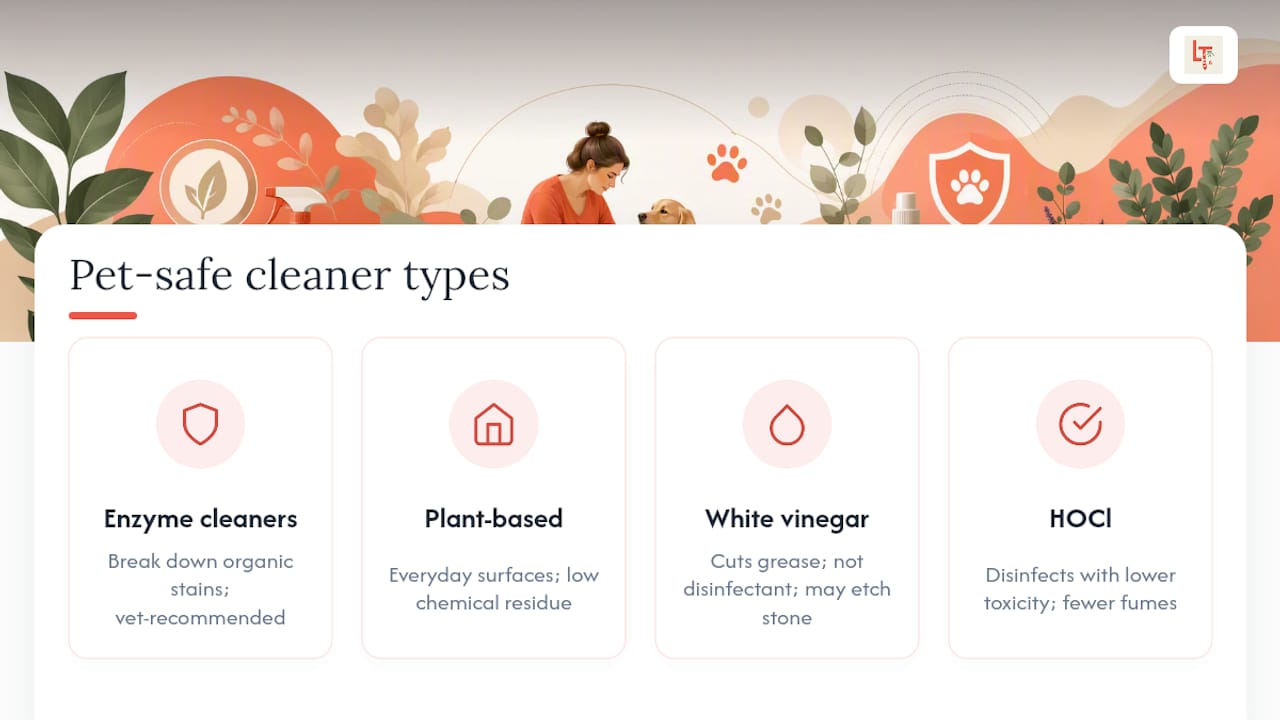
Enzyme cleaners break down the proteins in urine, vomit, and other organic stains at a molecular level instead of just masking the smell. Veterinarians recommend them specifically for pet accidents because they neutralize the odor compounds that draw pets back to the same spot repeatedly. A breakdown of how enzyme formulas work explains why they outperform standard cleaners on set-in organic messes.
Mild surfactant or plant-based cleaners handle general surface cleaning with far less chemical residue than ammonia-based or bleach-based products. These are your everyday counter, floor, and glass cleaners.
White distilled vinegar cuts grease and mineral buildup effectively, but it is not a disinfectant. It won’t kill viruses or bacteria the way an EPA-registered product does, and it can etch natural stone like marble or granite.
Hypochlorous acid (HOCl) has emerged as a lower-toxicity disinfectant option that still meets real sanitizing needs, useful when you want disinfection without the fumes ammonia or bleach produce.
When shopping instead of mixing your own, look past marketing language and check for actual certification. EPA Safer Choice, Green Seal, and MadeSafe labels indicate third-party review of a product’s ingredients, something Better Homes & Gardens points to as the real signal buyers should look for. A bottle that simply says “pet safe” on the front, with no certification backing it, deserves a second look at the ingredient panel.
DIY Pet-Safe Cleaning Recipes That Actually Work
These four formulas cover the messes that come up most often in a pet household, and each one comes with a rule about where it should and shouldn’t go.
-
All-purpose cleaner. Mix equal parts white distilled vinegar and water in a spray bottle for countertops, appliance exteriors, and sealed floors. Skip this on natural stone, unsealed wood, or hardwood, since the acidity can dull finishes over time.
-
Stain and odor remover. For carpets or fabric, make a baking-soda paste with a small amount of water, work it into the stain, let it dry completely, then vacuum. For anything organic, urine, vomit, or feces, an enzyme-based product will outperform baking soda on actually eliminating the odor at the source.
-
Carpet spot treatment. Diluted hydrogen peroxide (no more than 3%, cut further with water) lifts fresh spots on light-colored carpet. Spot-test on an inconspicuous corner first, since peroxide can lighten dyed fabric.
-
Glass and mirror cleaner. Combine water with a splash of vinegar, or use isopropyl alcohol diluted with water for a faster-drying finish. Buff with a lint-free cloth to avoid streaking.
Three rules matter more than the recipes themselves. Never mix cleaning products, especially anything containing bleach with anything containing ammonia or vinegar, since the combination produces toxic gas. Leave essential oils out of homemade formulas entirely; what smells pleasant to you can be genuinely harmful to a cat’s liver. And if you batch-mix a solution for later use, label the container clearly and store it on a high shelf or in a locked cabinet, out of paw’s and nose’s reach.
Pro Tip: Use filtered or distilled water in vinegar-based mixes if your tap water is hard. It prevents mineral spotting on glass and stainless steel, and it means you won’t be tempted to wipe surfaces dry with a paper towel before they’ve had time to fully evaporate.
Building a Pet-Safe Cleaning Routine That Sticks
Order matters more than most people realize. Declutter first, then vacuum, then spot-clean stains, then move to mopping or surface disinfecting last. This sequence keeps loose debris and pet hair from getting pushed around by a wet mop, and it means any chemical residue from spot treatments has time to be picked up before you’re wiping the whole floor.
When it comes to floors specifically, mop in sections and let each one air-dry rather than rushing pets back into the room. A floor that feels dry to the touch can still carry enough residue to matter if a dog immediately lies down on it or a cat walks across it and later grooms its paws. Give it the full 20 to 30 minutes mentioned earlier before reopening the room.
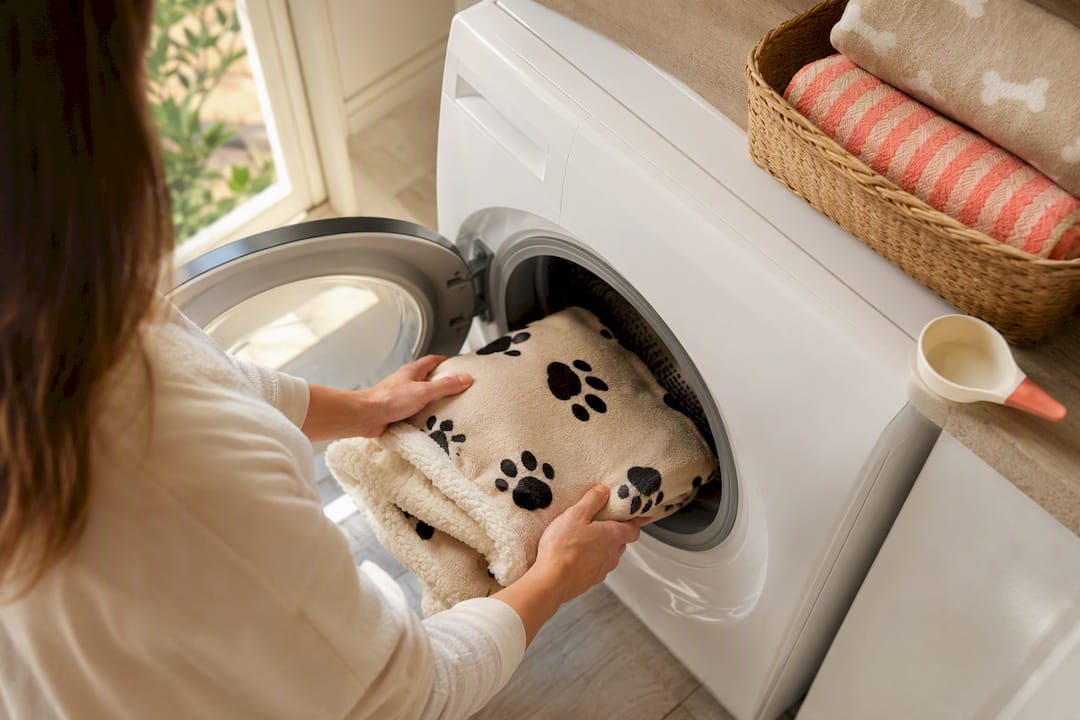
Laundry deserves the same scrutiny as surface cleaners. Pet bedding, blankets, and stuffed toys pick up dander, saliva, and skin oils fast, and washing them weekly in a pet-safe, fragrance-free detergent cuts down on both odor and allergens circulating through the house. Fragrance-free formulas reduce the VOC load in the air, which matters for pets with any respiratory sensitivity, not just humans with allergies.
Storage is the last piece, and it’s the one people forget. Every cleaning product, DIY or commercial, belongs in a cabinet with a latch or on a shelf a curious dog or agile cat genuinely cannot reach. If you’re prepping for a professional visit rather than cleaning yourself, a quick walkthrough of what to do before a cleaning service arrives covers exactly this kind of setup.
Special Precautions for Cats, Birds, and Small Pets
Not every pet processes airborne and topical chemicals the same way, and a routine that’s fine for a Labrador can be genuinely dangerous for a parakeet.
- Cats should never be exposed to phenols or most essential oils. Their livers lack the enzymes needed to metabolize these compounds, so even “natural” diffusers or scented cleaners can build up to toxic levels over repeated exposure.
- Birds have extraordinarily sensitive respiratory systems built for efficient oxygen exchange, which also means they absorb airborne toxins faster than mammals do. Skip aerosols and heavily scented products around them entirely, and move their cage to another room or outside the home during any stronger cleaning task.
- Small mammals and reptiles, including rabbits, guinea pigs, hamsters, and lizards, have tiny airways and thin skin relative to their body size. Stick to water-based, unscented cleaning near their enclosures, and remove them from the room rather than just covering the cage during cleaning.
The common thread across all three groups is size and metabolism. Smaller bodies and faster respiratory rates mean lower thresholds for what counts as a harmful dose, so the caution that feels excessive for a 60-pound dog is often exactly right for a 2-pound bird.
Signs of Cleaning Product Poisoning and What to Do
Watch for respiratory distress, uncontrolled vomiting, excessive drooling, seizures, or sudden severe lethargy. Any one of these after a cleaning session is a signal to act immediately, not to wait and see.
- Move the pet away from the cleaning area and into fresh air right away.
- If a product touched skin, fur, or eyes, flush the area with lukewarm water for several minutes.
- Call the ASPCA Animal Poison Control Center or the Pet Poison Helpline immediately, and have the product label or a photo of it ready to reference.
- Get to a veterinarian if symptoms persist or worsen, even if the initial call didn’t recommend an emergency visit.
Keep both poison control numbers saved in your phone before you ever need them, the same way you’d save a pediatrician’s line if you had kids. PreventiveVet also recommends reviewing pet insurance coverage for accidental poisoning, since emergency vet visits for chemical exposure aren’t cheap and can happen even in careful households.
When a Professional Cleaning Team Makes Sense for Pet Owners
Some households are better served handing the job to people who do this daily. Limpiezatropical builds its Miami cleaning service around an instant estimate tool that gives you a price in about 60 seconds, with service types ranging from standard cleaning to deep cleans built for exactly the kind of pet-related buildup that regular tidying misses.
A trained cleaning team brings something a bottle of vinegar can’t: consistent product selection, room-by-room containment so fumes don’t spread through the house, and drying protocols that don’t rely on you guessing whether a floor is safe yet.
Hiring a professional makes the most sense for large or set-in messes, for owners with mobility limits that make scrubbing floors difficult, and for households with a pet who has respiratory sensitivity where even mild exposure is a real concern.
Pro Tip: If your dog or cat has a history of respiratory issues, mention it when booking. It’s a simple note that lets the team plan ventilation and product choices around your pet specifically, not just the space.
A Practical Note From Luka
Most of the fear around cleaning with pets in the house comes from not knowing which ingredients actually matter. Once you swap bleach and ammonia for enzyme cleaners and vinegar, and build in a real drying window before pets come back into a room, the risk drops dramatically… The habit that changes outcomes most isn’t a fancier product. It’s patience, and knowing when to call in help instead of guessing.
— Luka
Get a Pet-Aware Cleaning Quote in 60 Seconds
Limpiezatropical is the alternative to guessing your way through a DIY cleaning routine when your household has pets, mobility limits, or a schedule that doesn’t leave room for scrubbing floors and waiting for them to dry. Every visit is built around the same principles covered above: careful product selection, proper ventilation, and drying time before pets are let back into a room.

The service menu covers standard cleaning, deep cleaning, move-in and move-out cleaning, and Airbnb turnover cleaning, with recurring plans available for households that want a consistent team rather than a rotating cast of strangers handling their space. Every visit includes complimentary fridge cleaning at no extra charge. If you’re not sure which service level fits your home, the instant estimate tool gives you a price in about a minute without waiting on a callback. Get your quote, pick a time that works, and let a trained local team handle the parts of cleaning that are hardest to get right with a pet underfoot.
Sources
- ASPCA — Official top 10 toxins 2024
- PetMD — Cleaning products that harm pets
- AKC — DIY dog-safe cleaning solutions