
What Is Included in Move Out Cleaning: A Full Checklist

A move-out cleaning is a full, top-to-bottom reset of an empty (or nearly empty) home, and it typically covers whole-home dusting, floor cleaning, interior appliance and cabinet cleaning, and deep bathroom and kitchen scrubbing that a routine cleaning skips entirely. Think of it less as tidying and more as resetting a home to zero, the way it looked (or should look) the day you moved in.
Here’s the printable version you can screenshot right now and check off room by room before your walkthrough:
- Whole home: dust and wipe baseboards, light fixtures, ceiling fans, window sills, vents, and remove cobwebs.
- Kitchen: wipe counters and backsplash, clean inside cabinets and drawers, degrease the stovetop, wipe appliance exteriors, and clean the microwave inside and out.
- Bathrooms: scrub toilets, tubs, showers, and sinks, polish mirrors, and address grout and tile buildup.
- Bedrooms and living areas: vacuum and mop all floors, wipe down closet shelves, and spot-clean walls and doors.
- Laundry, entryway, and storage: wipe down appliance exteriors, sweep and mop hard floors, and clear cobwebs from corners.
A handful of tasks usually fall outside that standard scope. Carpet steam cleaning, exterior window washing, oven deep-degreasing, and grout restoration are commonly billed as add-ons rather than baseline inclusions, so ask before you assume they’re covered.
Table of Contents
- What Is Included in Move Out Cleaning, Room by Room?
- Standard Cleaning vs. Add-Ons: Where the Line Gets Drawn
- Broom Clean vs. Professional Clean: What Your Lease Actually Requires
- How to Prepare for Move Out Cleaning So Nothing Gets Missed
- How Long Does It Take, and What Drives the Price?
- What Limpieza Tropical Sees at Move-Outs Across Miami-Dade
- Cleaning Vents and Air Returns
- Cleaning Light Fixtures and Ceiling Fans
- Spot-Cleaning Doors, Door Frames, and Light Switches
- Cleaning Inside Closets, Shelves, and Rods
- What’s Usually Excluded from Standard Move-Out Cleaning
- What Tenants and Landlords Both Get Wrong About Move-Out Cleaning
- Book a Move-Out Clean That Actually Matches Your Lease Terms
- Key Takeaways: Your Final Pre-Inspection Checklist
- Sources
What Is Included in Move Out Cleaning, Room by Room?
Move-out cleaning differs from your regular weekly tidy-up in one key way: it assumes nobody is living there anymore, so every surface, cabinet, and appliance interior is fair game. Here’s what that looks like when you break it down by area.
Whole-home tasks that apply everywhere
Before anyone touches a single room, a thorough crew works through the entire footprint of the home: dusting baseboards, wiping down light switches, clearing vents and window sills, knocking down cobwebs, and giving ceiling fans a pass. These are the details that get missed in a rushed clean but jump out immediately to a landlord doing a final walkthrough with a flashlight.
Kitchen
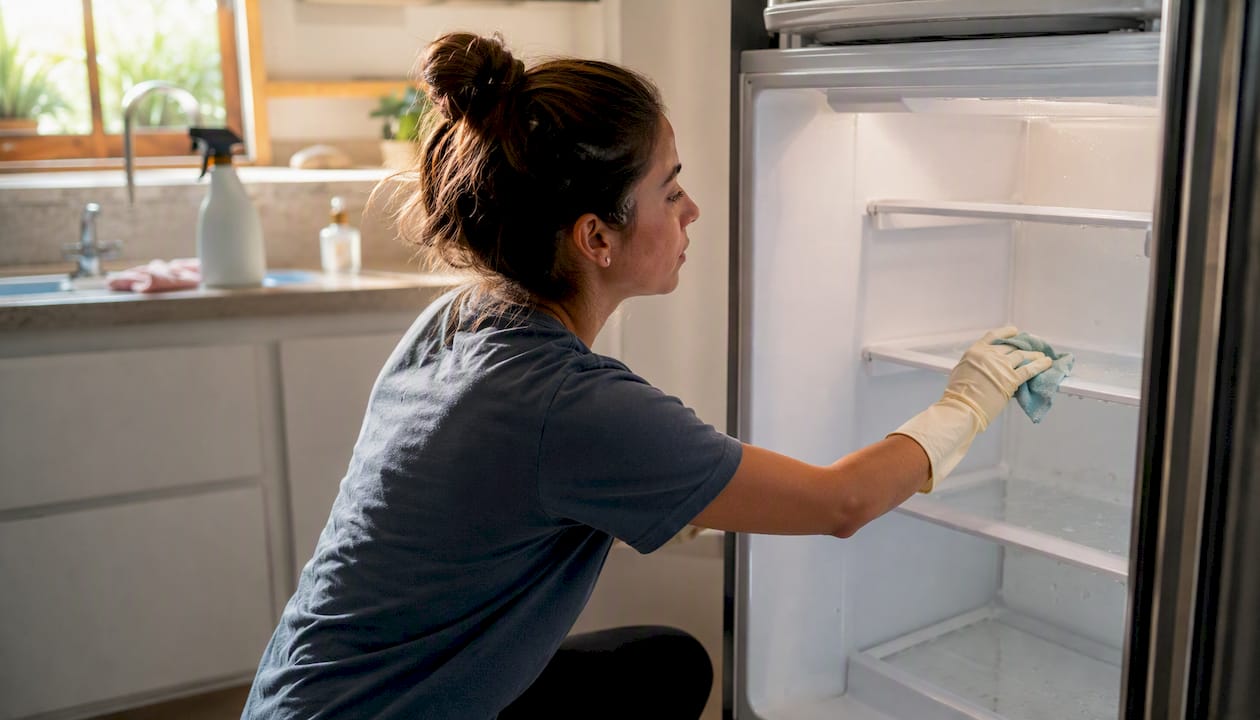
The kitchen carries the highest deposit risk in most units. A proper move-out clean covers counters, the backsplash, the sink, and faucet polishing, plus the inside of every cabinet and drawer. Appliance care usually includes the microwave (inside and out) and a stovetop degrease. The refrigerator interior and oven interior are sometimes standard and sometimes add-ons, depending on the provider, so this is the first thing to confirm on your quote. Floors get vacuumed and mopped last, once everything above them is done.
Bathrooms
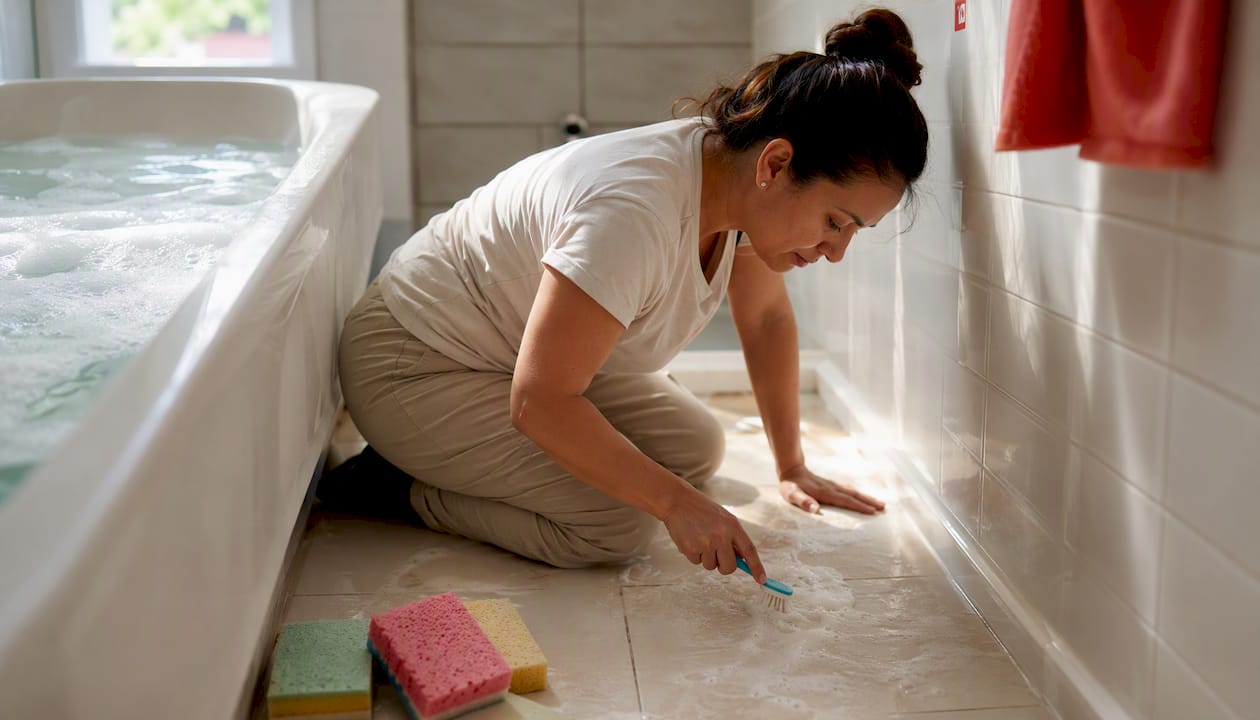
Bathrooms get scrubbed inside and out: toilet interior, exterior, and base, tub and shower surfaces, and close attention to grout and tile where mildew tends to hide. Fixtures get descaled, mirrors polished, the exhaust fan dusted, and floors finished at the end.
Bedrooms and living areas
Closet interiors get wiped down, floors vacuumed or mopped depending on surface, baseboards dusted, and walls spot-cleaned where scuffs and fingerprints have built up. Window tracks and blinds often get missed by DIY cleaners but are a standard line item in a professional move-out job.
Laundry, entryways, and storage
Appliance exteriors get wiped, lint traps cleared, floors swept and mopped, and cobwebs cleared from corners and ceilings. Garages and storage areas are usually swept but rarely deep-scrubbed unless you’ve specifically requested it.
Pro Tip: If you only have time to focus on three things before your landlord walkthrough, make it the oven, the fridge interior, and bathroom grout. Those three spots account for a disproportionate share of deposit disputes, and they’re the easiest for an inspector to spot.
Standard Cleaning vs. Add-Ons: Where the Line Gets Drawn
Every provider draws this line a little differently, which is exactly why quotes vary so much between companies. Generally, a standard move-out clean includes interior cabinets, basic appliance wipe-downs, baseboards, and all floor types. What tends to get billed separately:
- Carpet steam cleaning or shampooing
- Exterior window washing
- Heavy oven degreasing beyond a standard wipe
- Professional grout and tile restoration
- Mold remediation
- Wall washing (versus spot-cleaning)
- Heavy junk or debris removal
None of these are unreasonable add-ons. Steam cleaning equipment and mold remediation both require specialized tools most general cleaning crews don’t carry on a routine job.
Pro Tip: Ask for an itemized quote before booking, not after. If a company bundles carpet cleaning with your move-out service, you’ll often pay less than booking each separately, and you’ll avoid the awkward “that costs extra” conversation on service day.
Broom Clean vs. Professional Clean: What Your Lease Actually Requires
Most leases use the phrase “broom clean” or “move-in ready condition,” and those two terms are not interchangeable, even though tenants often treat them that way. Broom clean generally means floors swept, trash removed, and no personal belongings left behind. Move-in ready is a much higher bar: it implies the kind of deep clean that lets the next tenant walk in and start living, no lingering grease or grime anywhere.
Landlord inspections tend to zero in on the same handful of trouble spots every time. The TIDY Blog’s review of landlord checklists found that appliance interiors, bathroom fixtures and grout, floor stains, window tracks, and closets are the most common inspection points, and they’re also the most frequent reasons landlords dock deposits: dirty ovens, stained carpets, and bathroom mold, in that order.
If your lease only requires broom clean, a DIY sweep-and-wipe might genuinely be enough. If it references “professional cleaning” or “same condition as move-in,” you’re likely looking at hiring a crew, because that standard is hard to hit without one.
Pro Tip: Take time-stamped photos of every room before you hand over keys, especially the oven, fridge, and bathroom. It costs you two minutes and gives you real documentation if your landlord disputes the condition later.
How to Prepare for Move Out Cleaning So Nothing Gets Missed
A little prep work before your cleaning crew arrives goes a long way toward making sure the job matches your expectations and your quote.
- Remove all personal items and furniture from the areas being cleaned.
- Take out trash and recycling ahead of time.
- Unplug and empty the refrigerator and any other appliances being cleaned inside.
- Point out specific stains, problem areas, or spills to the crew when they arrive.
- Secure pets somewhere they won’t be underfoot or stressed by unfamiliar people.
- Confirm access instructions (keys, codes, parking) with the company beforehand.
Operators consistently recommend sending a room-by-room list and photos ahead of the appointment so the quote accounts for everything, including add-ons, before the crew shows up. That single step prevents most of the “why wasn’t this included” conversations that happen on service day.
Pro Tip: Don’t confuse decluttering with junk removal. If you’ve got a couch, old mattress, or a pile of boxes that need to go, book that separately. Most cleaning crews aren’t equipped to haul large debris, and trying to squeeze it into a cleaning appointment usually just eats into the time you’re paying for.
How Long Does It Take, and What Drives the Price?
Timing scales pretty predictably with square footage and how many wet rooms are involved. A studio typically runs several hours depending on the size and number of bedrooms, especially if carpet shampooing or full oven cleaning is part of the job.

Price moves with a handful of factors: total square footage, number of bathrooms, how soiled the space is, and which add-ons you’ve chosen. Local labor rates in Miami-Dade also play a role, and same-day or emergency scheduling almost always carries a premium over booking a few days out.
Statistic Callout: Oven interior cleaning and carpet shampooing are two of the most commonly cited fixed-fee add-ons across move-out cleaning providers, meaning they’re priced separately from the base service rather than folded into a flat rate. If you want an accurate number instead of guessing, Limpiezatropical’s instant estimate tool gives you a price in about 60 seconds based on your actual unit size and add-ons, no callback required.
What Limpieza Tropical Sees at Move-Outs Across Miami-Dade
We send crews into a lot of move-outs across Homestead, Kendall, Cutler Bay, and Coral Gables, and the same three failures show up over and over: a greasy oven nobody touched for a year, a fridge with spilled sauce fossilized in the crisper drawer, and bathroom grout that’s gone from white to gray. These aren’t judgment calls. They’re the exact spots landlords photograph first during a walkthrough.
Tenants almost never think about the oven or the fridge until the last week before moving, and by then there’s no time to deal with baked-on grease properly. Our teams build those two appliances into every move-out job by default, because skipping them is the single most common reason we hear about deposit disputes after the fact.
That’s part of why Limpiezatropical includes complimentary fridge cleaning with every visit rather than treating it as an upsell. Pair that with our instant estimate tool for pricing in under a minute, and the same local team assigned to your unit so you’re not explaining your home’s quirks to a new face every visit.
Cleaning Vents and Air Returns
Vents and air returns collect a surprising amount of dust, and they’re one of the first things a landlord notices when sunlight hits them at the wrong angle during a walkthrough. A standard move-out clean includes wiping down visible vent covers and air return grilles, both to remove dust buildup and because a dirty vent is often read as a sign the whole unit wasn’t cared for. Deeper duct cleaning, the kind that requires specialized equipment to clean inside the ductwork itself, is a separate service entirely and isn’t part of a standard cleaning scope.
Cleaning Light Fixtures and Ceiling Fans
Ceiling fans are dust magnets, and the blades collect buildup that’s invisible from the floor until someone turns the fan on and it goes everywhere. A thorough move-out clean includes wiping down each fan blade individually, not just a quick pass with a duster, along with light fixture covers and exposed bulbs. This is one of those details that takes an extra ten minutes per fixture but makes an enormous visual difference, especially in bedrooms and living rooms where fans run constantly and haven’t been touched in months.
Spot-Cleaning Doors, Door Frames, and Light Switches
Light switches and door frames near entryways collect handprints and grime faster than almost any other surface in a home, simply from repeated contact. A move-out clean includes wiping down every switch plate, doorknob, and door frame, along with spot-cleaning scuffs near high-traffic areas like hallways and stairwells. If your doors have textured surfaces or detailed trim, a gentle, non-abrasive cleaner works better than anything with heavy solvents, which can dull finishes over time.
Cleaning Inside Closets, Shelves, and Rods
Closets get overlooked constantly because they’re out of sight, but they’re absolutely part of a standard checklist. That means wiping down shelves, dusting closet rods, and vacuuming or sweeping the closet floor itself, not just the visible bedroom floor around it. Built-in shelving and any drawers inside a closet system get the same treatment as kitchen cabinet interiors: wiped down and left ready for the next occupant’s belongings.

What’s Usually Excluded from Standard Move-Out Cleaning
Every provider sets boundaries somewhere, and knowing where those boundaries typically fall saves you from an awkward surprise on service day. Exterior window washing almost always sits outside standard scope because it requires different tools and, in multi-story units, sometimes safety equipment. Wall washing (as opposed to spot-cleaning scuffs) is usually an add-on too, since full wall washing takes considerably longer and isn’t necessary in most units.
Garages and detached storage areas are typically swept but not deep-scrubbed unless you specifically request it. Mold remediation beyond routine bathroom cleaning is its own category entirely; providers commonly exclude serious mold issues from standard packages because it may require certified remediation rather than standard cleaning products. If your unit has any of these situations, flag them when requesting your quote so there are no gaps between what you expected and what’s actually covered.
What Tenants and Landlords Both Get Wrong About Move-Out Cleaning
The conventional advice treats move-out cleaning like a box-checking exercise: hire someone, get a receipt, hand over keys. That misses the real leverage point, which is timing your prep around what actually triggers deposit disputes rather than what feels satisfying to clean.
Most tenants spend their limited time and energy on visible surfaces, wiping counters, vacuuming carpets, because that’s what looks clean to the eye. But the data on deposit deductions tells a different story: ovens, carpet stains, and bathroom mold cause the most disputes, and none of those are things you notice from a quick glance around the room. That’s a mismatch between where tenants invest effort and where landlords actually look.
Landlords, for their part, often lean too hard on “broom clean” language in leases without being specific about what that means, which sets up disagreements that could’ve been avoided with a clearer standard spelled out up front. If you’re a landlord writing lease terms, specifying “professional move-out cleaning with receipt” removes the ambiguity entirely and protects both parties from a dispute neither one wants.
My honest read: hiring a professional crew isn’t about laziness or luxury. It’s closing the exact gap between what tenants think landlords check and what they actually check. That’s the whole game, and it’s why a checklist built around landlord inspection priorities, not general tidiness, is worth more than any generic cleaning guide you’ll find.
Book a Move-Out Clean That Actually Matches Your Lease Terms
Reading a checklist is one thing. Getting every oven, cabinet interior, and grout line actually handled before your final walkthrough is another. Limpiezatropical is built for exactly this moment: our move-in/move-out cleaning service covers the full room-by-room scope outlined above, and you can add carpet shampooing or exterior windows if your unit needs them.

Getting a price doesn’t require waiting for a callback. Our instant estimate tool gives you a real number in about 60 seconds based on your unit’s size, condition, and any add-ons you choose. Every visit also includes complimentary fridge cleaning, and because we assign the same local team to returning clients, there’s no re-explaining your unit’s quirks every time.
On service day, expect the crew to walk the unit with you briefly, confirm access and any problem spots you’ve flagged, and get to work. If your move date shifts, our scheduling has enough flexibility to accommodate most rebooking requests without hassle. If you’re across Miami-Dade, from Kendall to Cutler Bay to Coral Gables, check your area’s coverage and get your move-out quote started now.
Key Takeaways: Your Final Pre-Inspection Checklist
A thorough move-out clean succeeds when it targets the exact spots landlords inspect first: the oven, the refrigerator, bathroom grout, and carpet condition, rather than just general surface tidiness.
| Point | Details |
|---|---|
| Check the oven and fridge first | These two appliances cause the most deposit disputes, so confirm they’re cleaned or scheduled before anything else. |
| Address carpets before the walkthrough | Have carpets treated or clearly disclosed if you’re not paying for steam cleaning as an add-on. |
| Inspect bathroom grout closely | Grout and tile mildew are a top landlord red flag, so give this area a final look before handover. |
| Photograph everything with timestamps | Time-stamped photos of every room protect you if your landlord disputes the unit’s condition later. |
| Confirm lease-specific cleaning language | Check whether your lease requires professional cleaning receipts or carpet cleaning specifically. |
| Book with Limpiezatropical for full coverage | Limpiezatropical’s move-out packages cover the standard checklist above, plus optional carpet and window add-ons and free fridge cleaning. |
Sources
- What Does a Move-Out Clean Include? The Complete Guide - RMS Cleaning
- What Does Move Out Cleaning Include? A Full Checklist - Alex’s Cleaning Service
- Move-Out Cleaning Checklist: What Landlords Actually Check | TIDY Blog
- Move-Out Cleaning Services: What to Provide Clients - Taskbird
- Move-Out Cleaning - HelloCleaners Miami